


News
- ▶ How to prevent coil damage during delivery from a Monel 400 supplier
- ▶ How to compare freight costs from a monel 400 Coil supplier
- ▶ How coil edge quality affects stamping with Monel 400
- ▶ How to confirm temper requirements with a monel 400 Coil supplier
- ▶ When dual sourcing from an Inconel 625 Supplier reduces risk
Message
Precision Alloy Bars Market Outlook for Industrial Supply Chains
Precision Alloy Bars Market Outlook for Industrial Supply Chains
As industrial supply chains demand tighter tolerances, longer service life, and dependable sourcing, Precision Alloy Bars are becoming increasingly important for distributors, agents, and wholesalers. From corrosion resistance to high-temperature stability, these advanced materials support critical applications across multiple sectors. Understanding market trends, product performance, and supplier capabilities can help channel partners capture new opportunities and build a stronger competitive position.
The most important shift is not simply rising interest in higher-grade alloys. It is the way end users are rewriting procurement standards around operational risk. Buyers in energy, chemical processing, marine engineering, thermal equipment, and high-end manufacturing are paying closer attention to consistency between batches, traceability of melting and processing routes, and the ability of suppliers to hold dimensional tolerances over repeated orders. That changes the commercial role of Precision Alloy Bars. They are no longer treated as a specialty item ordered only when standard stainless grades fail. In many projects, they are moving upstream into design-stage material selection.
This has practical consequences for channel partners. Demand is becoming less transactional and more specification-driven. A distributor that once competed mainly on inventory depth now also needs to answer technical questions about corrosion mechanisms, heat resistance, machining behavior, and replacement cycles. When OEMs and EPC contractors shorten supplier lists, they tend to favor partners who can connect material grade selection with application conditions instead of just quoting available stock.
Supply chains are becoming more selective, not just more global
Over the past few years, many industrial buyers learned that global access does not automatically mean stable access. Volatility in nickel-related raw materials, freight disruption, geopolitical uncertainty, and uneven downstream recovery exposed a weak point in alloy sourcing: some supply chains were broad on paper but fragile in execution. In response, procurement teams have become more selective about where bars, forgings, powders, and semi-finished alloy products come from, how quickly substitute grades can be proposed, and whether the supplier has real processing capability behind the sales offer.
For companies active in special alloys, this favors producers with a wide material system rather than a narrow catalog. Shandong Titanium Nickel Special Steel Co., Ltd. operates across nickel-based, iron-based, corrosion-resistant, high-temperature, titanium, zirconium, copper-nickel, and other special alloy families. That matters because industrial demand rarely moves in a straight line by one grade alone. A buyer asking for a precision alloy bar today may also be evaluating corrosion-resistant alloys for adjacent piping, heat-resistant materials for furnace components, or a nickel-based alternative for a harsh chloride environment. Suppliers that can support those cross-material decisions are better positioned when project scopes expand.
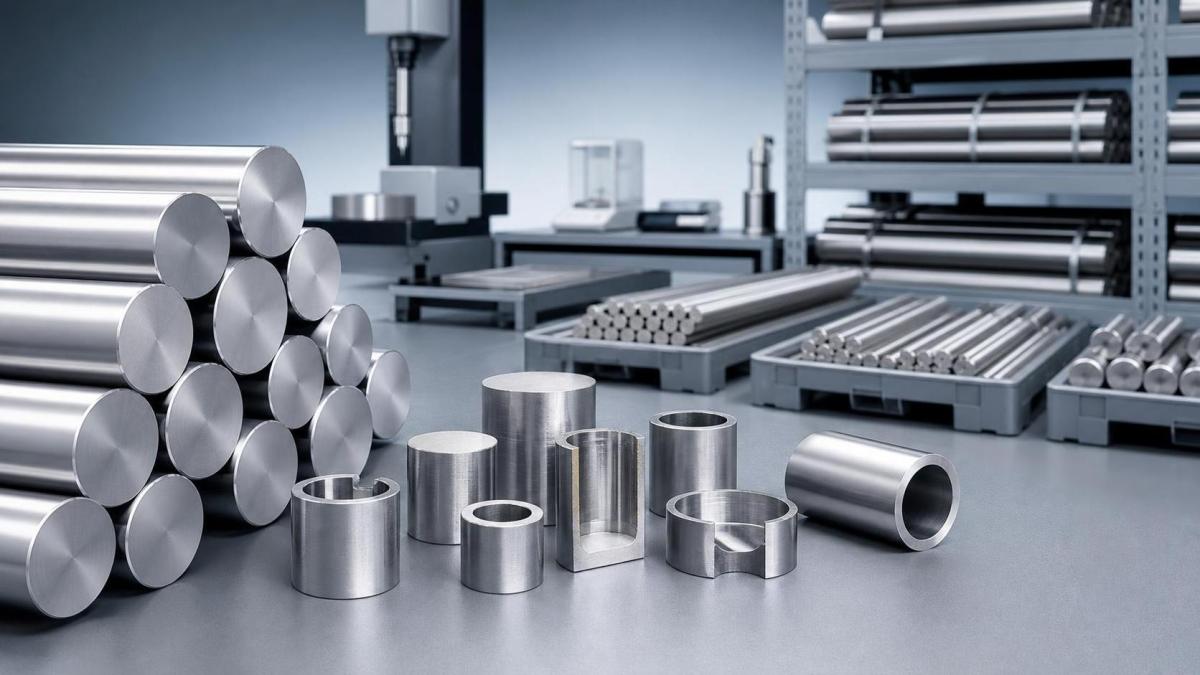
Another trend worth watching is the growing overlap between conventional long products and advanced manufacturing materials. In some sectors, engineering teams are no longer thinking in separate silos such as bar stock, cladding material, and additive feedstock. They are assessing the full lifecycle of a component: initial manufacture, surface enhancement, repair, and service extension. That is one reason materials adjacent to Precision Alloy Bars deserve attention. For example, Nickel-Based Superalloy Powders are gaining visibility in repair, additive manufacturing, and protective coating applications tied to turbine parts, valve sealing surfaces, shafts, combustion components, and corrosion-prone equipment. Even if a distributor’s core business remains bars and forged stock, customers increasingly expect guidance on how these product families interact in maintenance and replacement planning.
Why end users are moving up the value curve
In many industrial environments, material upgrades are being justified less by headline expansion and more by the cost of unplanned stoppage. A bar that holds strength and dimensional stability under heat, vibration, or corrosive media may look expensive on a unit-price basis, yet the replacement interval, maintenance burden, and failure risk can make lower-grade options uneconomic over time. This is not a new engineering principle, but it is becoming a more visible procurement filter, especially where plants are under pressure to reduce downtime and extend equipment life without major capital rebuilds.
That also explains why buyers often ask for more application-specific information rather than generic alloy claims. In practice, they want to know whether the material will hold up in heat exchangers exposed to mixed media, marine systems facing seawater corrosion, furnace hardware under cyclic temperatures, or valve and shaft components that combine wear with chemical attack. Precision Alloy Bars fit into this demand pattern because they sit at the intersection of mechanical reliability and process discipline. Tolerance control, cleanliness, and metallurgical stability are part of the value proposition, not secondary details.
There is also a subtle shift in how buyers compare vendors. Delivery time still matters, but lead time alone no longer closes the deal. More procurement teams want confidence that the supplier can keep quality stable when order quantities change, when repeat lots are scheduled over several months, or when a project requires both standard and nonstandard sizes. That favors manufacturers with integrated research, production, and sales functions, because the commercial conversation increasingly includes metallurgy, processing limits, and customization feasibility.
Signals distributors should read carefully
Several signals suggest where the market is heading, even without relying on aggressive forecasts. One is the broader industrial preference for materials that can survive more demanding environments with fewer maintenance interventions. Another is the spread of higher-performance standards in downstream sectors such as power generation, offshore systems, emission control, and process equipment. A third is the growing acceptance of hybrid sourcing strategies, where buyers keep conventional inventory for routine applications but qualify premium alloy sources for critical components.
A useful commercial response is to build inventory and sales strategy around real industrial failure points. Corrosion-resistant precision materials for chemical handling, heat-stable alloys for furnace and thermal processing systems, and high-performance nickel-based materials for severe service applications are not all growing at the same pace, but they are tied to the same purchasing logic: buyers want fewer material surprises once the equipment is in service.
This is also where adjacent technologies will shape future demand. Powder metallurgy, additive manufacturing, thermal spraying, and laser cladding are not replacing bars across the board, but they are influencing how parts are designed, repaired, and specified. Grades such as Inconel 718, Inconel 625, Hastelloy C276, Hastelloy X, and GH-series alloys are part of that broader material conversation. For channel partners, familiarity with products such as Nickel-Based Superalloy Powders can sharpen discussions with customers who are planning repairs, redesigns, or high-temperature upgrades rather than straightforward replacement buys.
The near-term outlook for Precision Alloy Bars is steady rather than spectacular, but steady in the parts of industry that matter: critical equipment, hostile service environments, and applications where failure costs more than the material upgrade. The next phase will likely depend on three variables that deserve close watching: how raw material volatility affects pricing behavior, whether industrial maintenance cycles remain active, and how quickly end users continue to integrate advanced material formats into mainstream sourcing decisions. Distributors that read those signals early will be in a better position to decide what to stock, which applications to target, and which supplier relationships are strong enough to support the next round of technical demand.
