


News
- ▶ How to prevent coil damage during delivery from a Monel 400 supplier
- ▶ How to compare freight costs from a monel 400 Coil supplier
- ▶ How coil edge quality affects stamping with Monel 400
- ▶ How to confirm temper requirements with a monel 400 Coil supplier
- ▶ When dual sourcing from an Inconel 625 Supplier reduces risk
Message
Nickel Alloy High Temperature Performance And Heat Resistance
Nickel alloy high temperature performance and heat resistance are critical factors in demanding industries such as aerospace, petrochemical processing, power generation, and thermal equipment manufacturing. Engineered to retain strength, oxidation resistance, and structural stability under extreme heat, nickel-based alloys provide reliable long-term performance where conventional metals may fail. The practical question, however, is not whether a nickel alloy can survive a high temperature; it is whether it can do so for the required service life while exposed to the actual combination of stress, atmosphere, thermal cycling, corrosion, and fabrication constraints.
This distinction matters in purchasing and engineering decisions. A material that performs well in a short laboratory exposure may be unsuitable for a furnace fixture, reformer component, turbine section, exhaust assembly, or chemical processing unit expected to operate for years. High-temperature alloy selection therefore requires a service-condition assessment rather than a simple comparison of melting points or room-temperature tensile strength.
Why nickel remains effective at elevated temperatures
Nickel is valuable as an alloy base because its crystal structure remains stable across a broad temperature range. When alloyed with chromium, cobalt, molybdenum, tungsten, aluminum, titanium, iron, and other elements, nickel can be tailored to resist different high-temperature damage mechanisms.
Chromium is particularly important where oxidation and hot corrosion are concerns. At suitable temperatures and oxygen availability, it helps form a protective chromium oxide scale. Aluminum can support the formation of alumina scales in certain advanced superalloys, offering strong protection in highly oxidizing environments. Molybdenum and tungsten improve high-temperature strength, while aluminum and titanium may create gamma-prime strengthening phases in precipitation-hardened nickel superalloys.
The result is not one universal “heat-resistant nickel alloy,” but a family of materials optimized for different risks. Some grades are selected primarily for oxidation resistance; others for creep strength, carburization resistance, chloride corrosion resistance, thermal-fatigue performance, or weldability after long exposure.
Heat resistance is more than a maximum temperature figure
Datasheets often list a recommended operating temperature range, but this should not be treated as an unconditional design limit. The allowable temperature depends on the component’s geometry, applied load, exposure duration, and atmosphere. A thin, lightly loaded sheet in clean air has a very different requirement from a pressure-bearing tube in a reducing, sulfur-bearing process gas.
Four questions usually determine whether an alloy is genuinely suitable:
- Will the alloy retain load-bearing strength? At elevated temperature, creep becomes more important than room-temperature tensile strength. Creep is time-dependent deformation under sustained load and can lead to distortion or rupture even when stress remains below the material’s conventional yield strength.
- Can it form and retain a protective surface scale? Oxidation resistance depends on scale adhesion and stability. Repeated heating and cooling can cause scale spallation, exposing fresh metal and accelerating attack.
- What is present in the process atmosphere? Steam, carbon monoxide, methane, sulfur compounds, chlorides, molten salts, ash, and low-oxygen gases can change corrosion behavior dramatically.
- How often will the equipment cycle? Thermal cycling produces expansion and contraction. Where temperature gradients are steep or components are restrained, thermal fatigue can become the governing failure mode.
These variables explain why an alloy chosen solely because it has a high melting point can fail prematurely. Melting point is not a measure of long-term strength, oxidation performance, or resistance to metallurgical instability in service.
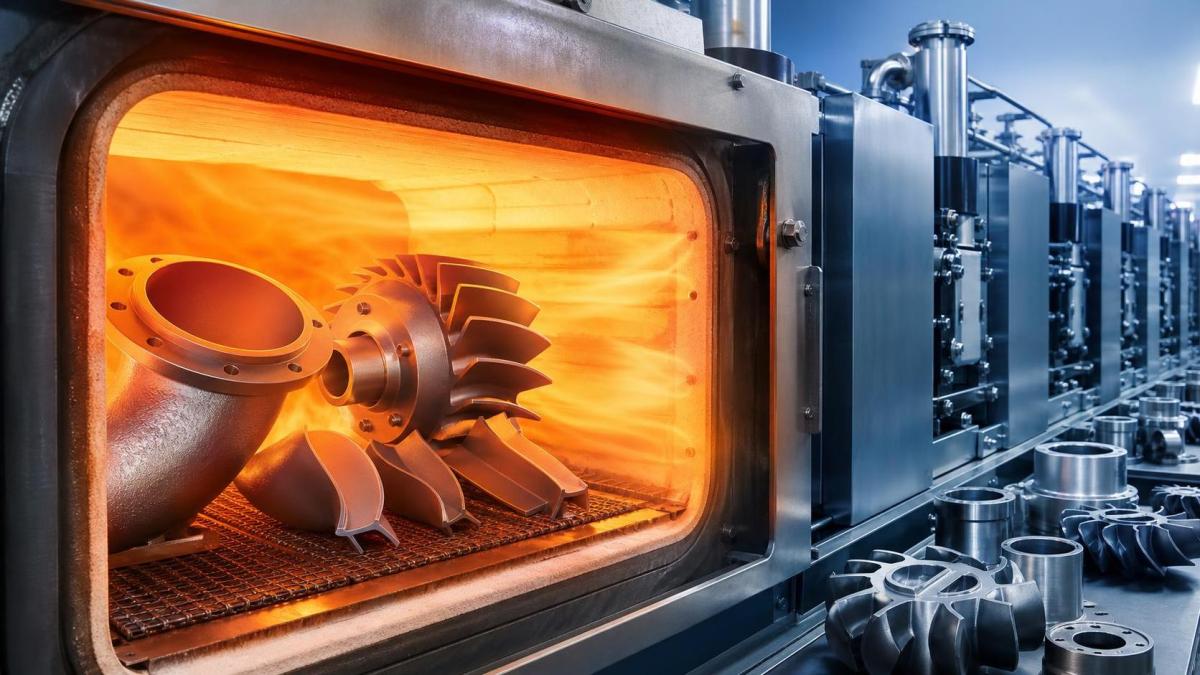
The main degradation mechanisms buyers and engineers should evaluate
Oxidation is the most familiar high-temperature concern. In clean, oxidizing air, chromium-bearing nickel alloys generally outperform carbon steels and many stainless steels as temperatures rise. Yet oxidation behavior is not linear. Once a protective scale cracks, volatilizes, or detaches, metal loss can increase rapidly.
Creep and stress rupture dominate in heavily loaded, high-temperature equipment. Gas turbine hot-section parts, furnace supports, high-temperature fasteners, and pressure-containing components require creep-rupture data at the planned temperature and duration. Procurement specifications should request values relevant to the intended service window, rather than accepting general grade descriptions.
Carburization and metal dusting are especially relevant in hydrogen, syngas, reforming, and petrochemical environments. Carbon activity in the atmosphere can lead to internal carburization, embrittlement, or destructive surface disintegration. A grade with good air oxidation resistance may not be the best choice in a carbon-rich gas.
Hot corrosion and sulfidation occur where sulfur, salts, or contaminants are present. These conditions can undermine otherwise protective oxide scales. Fuel quality, salt deposition, operating temperature, and shutdown practices all influence risk.
Thermal fatigue is frequently underestimated in industrial equipment. Furnace doors, radiant tubes, manifolds, exhaust hardware, and welded assemblies may experience local hot spots and repeated starts and stops. Low thermal expansion, adequate ductility, stable weld metal, and thoughtful joint design can matter as much as nominal heat resistance.
Different nickel alloy families solve different problems
Nickel-chromium-iron alloys such as common INCONEL and INCOLOY families are widely used where oxidation resistance, strength, and fabrication practicality must be balanced. They appear in furnace equipment, heat-treatment fixtures, power-generation systems, and petrochemical hardware. Their suitability still varies substantially by grade and temperature range.
Nickel-chromium-molybdenum alloys, often associated with the Hastelloy family, are typically valued for corrosion resistance in severe chemical environments. They may be appropriate where high temperature is combined with aggressive process media, but they should not automatically be considered replacements for precipitation-strengthened superalloys in high-stress service.
Nickel-cobalt-based heat-resistant alloys and precipitation-hardened nickel superalloys are more relevant where exceptional creep strength is required. Aerospace turbine components are the best-known example, although these materials also have industrial gas turbine and specialized thermal-processing applications. Their higher performance often comes with stricter processing, heat-treatment, machining, and traceability requirements.
Nickel-copper alloys such as Monel occupy a different position. They are widely recognized for resistance to seawater, chlorides, and certain acidic media, which makes them useful in marine, oil and gas, chemical, and power-related applications. Their thermal performance can be useful in selected equipment, but they should not be assumed to replace dedicated nickel-chromium high-temperature alloys in continuously oxidizing, heavily loaded service near the upper end of industrial temperature ranges. For strip applications involving corrosion resistance, forming, and fabrication reliability, buyers may evaluate Monel Alloy Steel Strips in grades such as Monel 400 or K-500 alongside the actual temperature, exposure medium, and stress requirement.
Material selection should start with the service envelope
A disciplined selection process begins with a service envelope document. It should identify normal and upset temperatures, maximum metal temperature rather than only gas temperature, pressure, mechanical load, expected operating life, thermal-cycle frequency, atmosphere composition, contaminant sources, and cleaning or shutdown conditions.
For example, a component in a refinery heater may experience a nominally controlled process temperature but see higher local metal temperatures due to fouling, poor flow distribution, or flame impingement. In a waste-to-energy plant, ash chemistry and chloride-bearing deposits can be more damaging than the average temperature alone. In marine exhaust or offshore equipment, salt exposure during cooling periods may alter the corrosion mechanism entirely.
Once the envelope is clear, selection should compare candidate alloys against the likely failure mechanism. This prevents the common but costly practice of specifying an expensive alloy with excellent corrosion resistance when creep strength is the limiting factor—or choosing a strong alloy that cannot withstand the process atmosphere.
Fabrication and weld quality can determine field performance
Nickel alloy high temperature performance is not delivered by chemistry alone. Forming, machining, welding, solution annealing, aging treatment, surface condition, and post-weld cleaning can all influence the final result. Improper heat input during welding may cause distortion, hot cracking risk, or local changes in corrosion behavior. In cyclic service, weld geometry and residual stresses can become initiation points for fatigue cracking.
Specifications should therefore address more than the base material grade. They may need to define product form, applicable material standard, heat-treatment condition, filler metal, welding procedure qualification, non-destructive examination, dimensional tolerances, surface cleanliness, and traceability by heat number. For critical equipment, positive material identification and documented chemical analysis are practical safeguards against grade substitution.
Supply-chain control is particularly important in cross-border procurement. Alloy names are often used broadly in commercial communication, while technical requirements are grade-specific. A purchase order should state the governing standard and required properties, not merely a trade name. If the component is safety-critical or intended for a regulated pressure system, purchasers should align documentation with the project code and the end user’s inspection plan.
Cost should be measured over service life, not at purchase order stage
Nickel alloys carry a significant initial cost because of nickel content, alloying additions, energy-intensive processing, and quality-control demands. The premium can be justified where failure causes unplanned shutdown, contamination, safety exposure, production loss, or difficult offshore replacement.
That said, over-specification is also a real commercial risk. The appropriate decision is not always the most alloyed grade. It is the grade that provides adequate life with a realistic fabrication route and manageable procurement lead time. Comparing installed cost, expected maintenance intervals, spare strategy, welding complexity, and consequences of failure often gives a more useful answer than comparing price per kilogram.
In practice, the strongest material decision combines metallurgical evidence with operating knowledge: real metal temperatures, credible atmosphere data, relevant creep or corrosion test results, and a manufacturing plan that preserves the alloy’s intended properties. That approach is what turns high-temperature nickel alloy selection from a catalogue exercise into a defensible engineering and commercial decision.
