


News
- ▶ How to prevent coil damage during delivery from a Monel 400 supplier
- ▶ How to compare freight costs from a monel 400 Coil supplier
- ▶ How coil edge quality affects stamping with Monel 400
- ▶ How to confirm temper requirements with a monel 400 Coil supplier
- ▶ When dual sourcing from an Inconel 625 Supplier reduces risk
Message
Nickel Alloy Plate, Sheet, Tube, Bar And Wire Guide
Nickel alloy plate, sheet, tube, bar, and wire are not interchangeable forms of the same purchasing decision. They may be made from the same nominal grade, but the manufacturing route, dimensional tolerance, surface condition, testing requirements, and downstream fabrication risks can be very different. For buyers and engineers working in chemical processing, power generation, marine service, aerospace, oil and gas, or high-temperature equipment, the material form is often as important as the alloy designation on the certificate.
The practical question is rarely “Which nickel alloy is best?” It is usually: which material form and grade can survive this specific combination of temperature, pressure, chloride exposure, reducing media, cyclic loading, welding, and maintenance constraints without creating unnecessary cost or fabrication difficulty? A sound answer starts with the service environment, not with a familiar alloy name.
Why nickel alloys deserve a closer look
Nickel-based alloys are selected when stainless steel, carbon steel, or ordinary heat-resistant steel approaches its limits. Their value comes from the ability to combine corrosion resistance, oxidation resistance, elevated-temperature strength, and metallurgical stability. Chromium commonly supports oxidation and general corrosion resistance; molybdenum can improve resistance in reducing acids and chloride-bearing environments; copper is important in certain seawater and hydrofluoric acid applications; cobalt, aluminum, titanium, and other additions may support high-temperature strength or precipitation-hardening behavior.
That broad capability should not be mistaken for universal resistance. A nickel alloy that performs well in hot oxidizing gas may not be the right answer for wet hydrochloric acid. A grade chosen for seawater may not retain adequate strength in a turbine exhaust system. Material selection must account for the actual medium, contaminants, concentration, operating temperature, pressure, flow conditions, crevices, deposits, and shutdown cycles.
In procurement, this is where expensive mistakes begin. A specification that merely says “nickel alloy” leaves too much open to interpretation. The grade, product form, governing standard, dimensions, condition, testing, traceability, and any supplementary requirements should be defined before quotations are compared.
Start with the environment, then choose the alloy family
For corrosion-driven applications, nickel-chromium-molybdenum alloys are frequently considered for severe acid, chloride, and mixed-chemical conditions. Nickel-copper alloys are often relevant to marine equipment, seawater systems, and selected chemical media. Nickel-chromium-iron grades are widely used where oxidation resistance, heat strength, and reasonable corrosion performance are needed. High-temperature nickel alloys are more commonly specified for combustion, furnace, turbine, and aerospace components where creep resistance and thermal fatigue matter.
The distinction between corrosion resistance and high-temperature strength is especially important. An alloy may resist oxidation at a high temperature but lose useful mechanical strength under sustained load. Conversely, a strong precipitation-hardened alloy may require tightly controlled heat treatment and may be less forgiving in welding or repair work. Service life depends on the whole operating window, rather than one headline property.
When evaluating published operating temperatures, treat them as a starting point, not a design approval. Limits can vary substantially with alloy composition, stress level, atmosphere, component geometry, thermal cycling, and applicable design code. For critical equipment, final temperatures, allowable stresses, and corrosion assumptions should be verified against the relevant standard and engineering calculation.
What each product form changes in practice
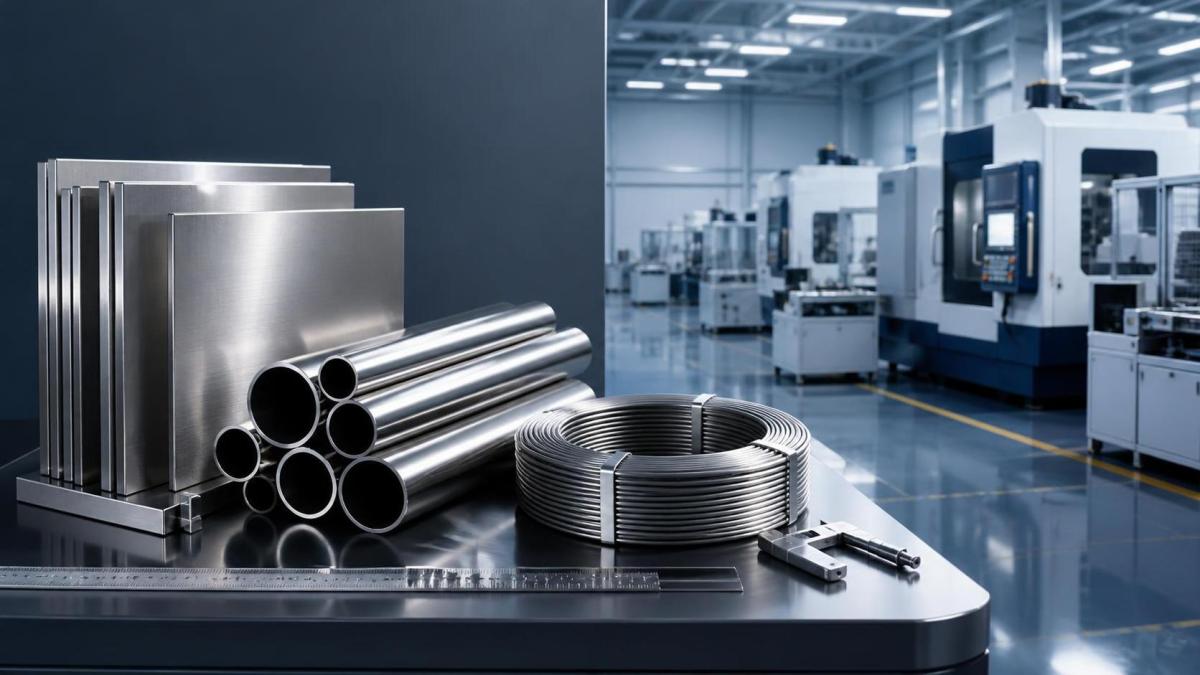
Plate and sheet are commonly used for pressure vessels, heat-exchanger shells, reactor linings, scrubber components, ducting, furnace parts, and fabricated chemical equipment. The dividing line is often thickness, although the exact commercial convention varies by supplier and standard. Plate selection requires attention to thickness tolerance, flatness, ultrasonic examination where required, edge condition, surface finish, and weldability. Thick sections also introduce more concern about through-thickness properties, heat input during welding, and the availability of matching filler metals.
For sheet, fabrication details often dominate. Tight bends, deep drawing, laser cutting, stamping, and polished architectural or process surfaces can all require a particular temper and finish. A buyer should not assume that material supplied in an annealed condition will behave the same as a cold-worked product in forming operations. Coil width, slit-edge quality, protective film, and surface cleanliness may also affect yield in automated production.
Tube and pipe are central to heat exchangers, condensers, instrument systems, chemical transfer lines, furnace radiant tubes, and offshore equipment. The first decision is whether seamless or welded construction is appropriate. Seamless tube can be preferred for certain high-pressure, high-integrity, or critical corrosion applications. Welded tube may be technically suitable and commercially attractive in many services, but weld quality, weld treatment, eddy-current testing, hydrostatic testing, and corrosion performance of the seam need to align with the application.
Tube specifications should state outside diameter, wall thickness, length, straightness, temper, end condition, and required test methods. In heat exchangers, also assess expansion behavior, tube-to-tubesheet compatibility, fouling risk, vibration, and the possibility of crevice corrosion. Selecting an excellent tube alloy will not compensate for a poor exchanger design or unsuitable water chemistry.
Bar is generally used for machined valves, fasteners, shafts, pump components, fittings, nozzles, and structural hardware. Here, machinability, bar straightness, ultrasonic integrity, grain structure, and final mechanical properties can be decisive. Some high-strength nickel alloys work-harden rapidly, requiring suitable tooling, stable machining parameters, and realistic cycle-time planning. For bolting and pressure-retaining parts, purchasers should also confirm whether the certification addresses the supplied bar or the finished, heat-treated component.
Wire serves springs, mesh, resistance heating elements, welding consumables, fasteners, screens, and precision components. Wire requirements are often more sensitive to diameter consistency, tensile range, ductility, coil quality, cast and helix, and surface condition. In fine wire applications, minor variability can affect automated forming or electrical performance. Wire for welding should be matched not only to the base alloy but also to the weld procedure, service medium, and any post-weld heat treatment.
Grade names are not enough for purchasing control
Two offers may cite the same alloy grade yet differ materially in usability. One may be sourced from a controlled melt route with full traceability and third-party inspection; another may provide only a basic chemical certificate. Neither is automatically wrong, but they should not be evaluated as equivalent where failure consequences are high.
Material test certificates should be reviewed for more than the alloy chemistry. Check product form, heat number, dimensions, condition, mechanical test results, standard edition, and whether the certificate identifies actual results or only compliance statements. Where the alloy is intended for a regulated pressure system, aerospace program, nuclear-related service, or safety-critical chemical plant, additional documentation and independent inspection may be necessary. The applicable requirements should be confirmed with the relevant code owner or project specification【待核实】.
Fabrication can change corrosion performance
Nickel alloys are frequently purchased because of their corrosion resistance, then weakened by poor fabrication practice. Iron contamination from carbon-steel tools, embedded grinding debris, heat tint near welds, improper filler metal, excessive heat input, or incomplete cleaning can all create localized corrosion risks. Shops should segregate tooling where practical, control consumables, use qualified welding procedures, and specify cleaning or pickling methods suitable for the alloy and service environment.
Welding needs particular attention. Many nickel alloys are readily weldable when procedures are properly controlled, but “weldable” does not mean that any filler, shielding gas, or heat input is acceptable. A filler metal may be selected to maintain corrosion resistance in the weld metal, compensate for dilution, or accommodate dissimilar joints. For aggressive media, the weld and heat-affected zone can become the limiting area of an otherwise well-selected component.
Forming and machining should also be planned early. Nickel alloys can require higher forming loads than austenitic stainless steels, and their work-hardening behavior may affect bend radii, intermediate annealing, tool wear, and dimensional stability. Requesting the lowest initial material price without accounting for fabrication yield can produce a higher finished-part cost.
Where high-temperature strip fits into the picture
Not every elevated-temperature duty requires a fully nickel-based alloy. In applications such as industrial furnaces, heat exchangers, power-generation equipment, and selected aerospace components, iron-based high-temperature alloy strip may offer a practical balance of heat resistance, oxidation resistance, strength, and material cost. Composition, temperature, load, atmosphere, and expected operating life remain the governing factors.
For thin-gauge fabricated parts, buyers may compare nickel alloy sheet with High-Temperature Alloy Steel Strips in thicknesses typically associated with strip production, such as 0.1 mm to 3 mm. Some high-temperature alloy systems are described for service from roughly 650°C to 1000°C, but the actual usable limit depends heavily on grade and duty conditions【待核实】. This comparison is useful when the primary risk is oxidation and thermal deformation rather than severe aqueous corrosion.
Common assumptions that deserve scrutiny
- “Higher nickel always means better corrosion resistance.” Alloying balance matters more than nickel content alone. Chromium, molybdenum, copper, and the service chemistry can change the outcome.
- “A corrosion-resistant alloy eliminates the need for inspection.” Crevices, deposits, weld defects, stagnant zones, and process upsets can still drive failure.
- “The same grade performs the same in every form.” Thickness, heat treatment, weld seam condition, surface finish, and manufacturing route affect behavior and fabrication.
- “Stock availability proves suitability.” Readily available dimensions may be commercially convenient but technically unsuitable for the design requirement.
- “A certificate settles all quality questions.” Certification is essential, but receiving inspection, identification control, and application-specific testing may still be needed.
Build the request for quotation around the real failure mode
A useful RFQ describes the component function and service conditions alongside the material designation. Include the medium, concentration where relevant, normal and upset temperatures, pressure, expected cycles, dimensions, product form, required standard, heat-treatment condition, tests, certification level, quantity, delivery timing, and any machining or cutting requirement. When the final application involves highly corrosive or high-temperature duty, identify the intended failure mode: pitting, crevice corrosion, stress corrosion cracking, oxidation, carburization, creep, thermal fatigue, or erosion-corrosion.
This information allows suppliers to flag whether a requested grade is difficult to source in a particular form, whether a substitute needs engineering approval, or whether a different alloy family may reduce lifecycle risk. It also makes quotation comparisons more meaningful. The lowest unit price for plate, tube, bar, or wire is rarely the lowest project cost when rework, delayed qualification, weld repair, or premature replacement is involved.
The strongest material decision is therefore not a catalog selection. It is a documented match between environment, alloy chemistry, product form, fabrication route, verification level, and expected service life. Once those conditions are defined, nickel alloy plate, sheet, tube, bar, and wire become manageable engineering choices rather than expensive unknowns.
