


News
- ▶ How to prevent coil damage during delivery from a Monel 400 supplier
- ▶ How to compare freight costs from a monel 400 Coil supplier
- ▶ How coil edge quality affects stamping with Monel 400
- ▶ How to confirm temper requirements with a monel 400 Coil supplier
- ▶ When dual sourcing from an Inconel 625 Supplier reduces risk
Message
Common Fabrication Problems with Monel Alloy Steel Plate
Common Fabrication Problems with Monel Alloy Steel Plate
Monel Alloy Steel Plate is valued for its excellent corrosion resistance and strength, but fabrication can still present challenges for operators and end users. From work hardening and tool wear to welding distortion and surface contamination, understanding these common problems is essential for maintaining quality, performance, and production efficiency. This article explores the key fabrication issues and practical ways to reduce risks in daily processing.
If you work with Monel Alloy Steel Plate on the shop floor, most trouble does not start at the final inspection table. It usually starts earlier, during cutting, handling, setup, or when someone assumes Monel will behave like ordinary stainless plate. It will not. The alloy is tough, resistant, and very useful in marine, chemical, and heat-exposed service, but it can punish poor fabrication habits quickly.
What follows is the kind of checklist operators actually use to avoid scrap, rework, and field complaints.
Check the material condition before you cut anything
A lot of fabrication problems blamed on the machine are really plate condition issues. Before processing Monel Alloy Steel Plate, confirm the heat number, surface condition, thickness tolerance, and whether the plate was supplied annealed, cold worked, or with any special finish. If that information is missing, stop and verify. Monel that has already seen cold work will harden faster during machining and forming.
Also inspect for handling damage, embedded iron contamination, edge cracks, and storage stains. Surface contamination matters more than many teams expect, especially where the finished part will face seawater, chlorides, or chemical media.
Watch for work hardening early
This is one of the most common fabrication headaches with Monel Alloy Steel Plate. If the tool rubs instead of cuts, the surface work-hardens almost immediately. Once that happens, the next pass gets harder, tool wear accelerates, and dimensional control starts drifting.
- Use sharp tooling only. A slightly worn tool is already a bad tool for Monel.
- Keep feed steady. Hesitation causes rubbing.
- Avoid light skim cuts on hardened areas unless your tooling setup is designed for it.
- Use rigid fixturing. Vibration makes the problem worse.
A practical sign: if cutting effort rises suddenly after a clean start, or the tool edge starts failing much faster than expected, assume work hardening is part of the problem before changing everything else.
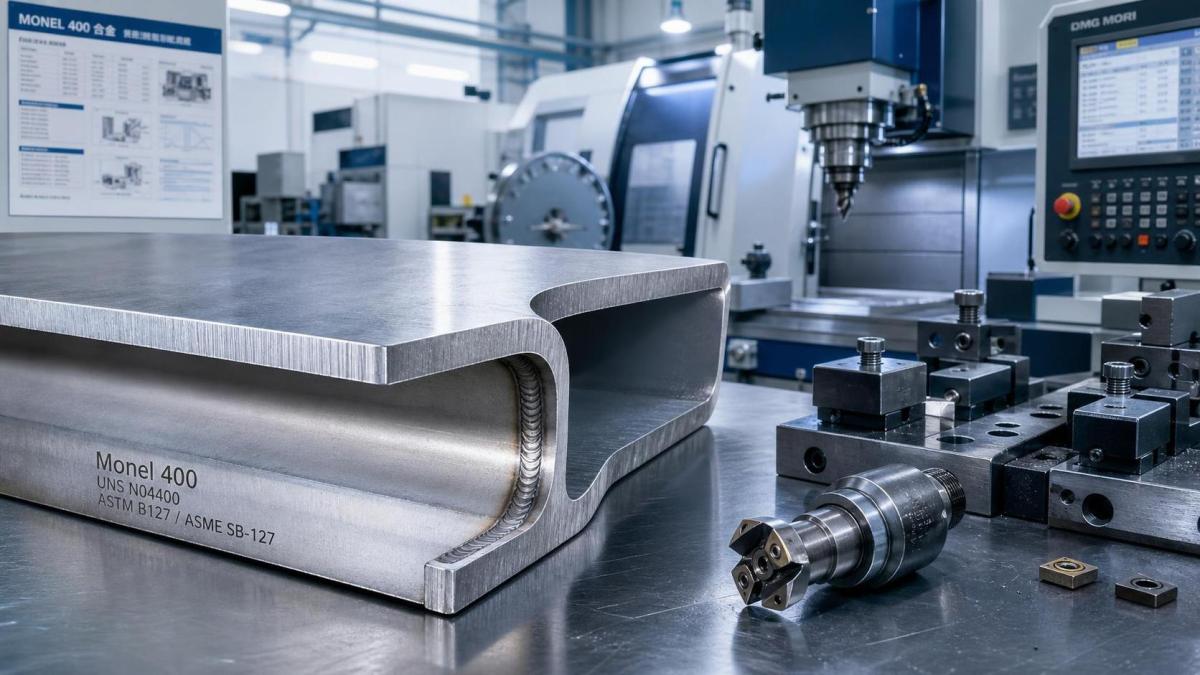
Do not underestimate tool wear
Monel is not impossible to machine, but it is expensive to machine badly. Operators often focus on speed, then lose more time replacing inserts, correcting chatter marks, or cleaning poor edges. Tool wear tends to show up as rough finish, heat discoloration, burr growth, and unstable dimensions.
Use tooling grades recommended for nickel-containing alloys and keep coolant delivery consistent where wet machining is used. In some shops, dry cutting is attempted for convenience; that can work in limited cases, but it needs process control. If heat builds up and chips are not clearing well, expect shorter tool life and more surface damage.
Bending problems usually show up as springback or edge cracking
Monel Alloy Steel Plate can be formed, but it does not forgive poor bend planning. Operators often run into more springback than expected, especially on thicker sections or tighter radii. If the plate has been work-hardened by previous operations, cracking risk goes up.
Before forming, check three things: actual thickness, bend radius, and grain direction if that information is available from the supplied material. Where a tight bend is necessary, trial pieces are usually cheaper than reworking production parts. If cracking starts at the edge, inspect cut quality too. Rough thermal-cut edges often become the starting point for failure.
Cut edge quality affects everything downstream
Bad edges cause more than cosmetic trouble. They create stress raisers, hurt weld fit-up, and increase the chance of cracking during forming. If you are plasma cutting or using another thermal method, inspect the heat-affected edge carefully and remove damaged material where required by the part standard or customer specification. There is no universal removal depth rule here; that has to follow the actual procedure and drawing requirements.
For critical corrosion service, cleaner cut edges and proper finishing are worth the time. In aggressive environments, a damaged edge can become the place where service life starts to fall apart.
Welding distortion is manageable, but only if fit-up is disciplined
Weld distortion on Monel Alloy Steel Plate is not always dramatic, but operators get into trouble when they chase poor fit-up with excess heat input. That creates a chain reaction: more distortion, wider cleanup, and greater chance of surface oxidation or dimensional rejection.
Good practice is basic but non-negotiable: keep joint faces clean, clamp properly, use the correct filler metal specified by the procedure, and avoid oversized welds. Interpass temperature control should follow the approved welding procedure specification, not guesswork. If no qualified procedure is available, that is a process control gap, not a shop-floor adjustment issue.
Where mixed-alloy fabrication is involved, operators should be especially careful about material mix-up. Shops producing nickel alloys often also handle other corrosion-resistant materials. For example, when fabricating components alongside Hastelloy Alloy Sheet, traceability and filler selection need extra attention because the materials may sit in the same production flow but not share identical welding requirements.
Keep carbon steel contamination out of the process
This is still a very common shop mistake. Using the same wire brushes, grinding discs, tables, or slings that were used on carbon steel can transfer contamination onto the Monel surface. The problem may not be obvious on day one, but in corrosive service it can show up later as staining, local attack, or customer rejection after inspection.
- Use dedicated stainless or alloy-only tools where possible.
- Separate storage and work surfaces from carbon steel fabrication zones.
- Clean before welding, not just after.
If a project serves chemical processing, marine hardware, reactors, valves, or piping systems, contamination control is not a housekeeping detail. It directly affects service reliability.
Inspection should match the service risk
Do not rely on visual checks alone when the part is going into severe duty. For some applications, dimensional inspection, weld examination, PMI【待核实 for project requirement】, and surface cleanliness checks may all be appropriate. The right inspection scope depends on the drawing, code, customer requirement, and end-use environment.
In broader alloy fabrication, some users compare Monel parts with heavier corrosion-duty materials such as Hastelloy Alloy Sheet, especially for equipment exposed to aggressive chemicals or elevated temperatures. Standards commonly referenced for certain Hastelloy sheet products include ASTM B575 and ASME SB-575, and some grades are known for high-temperature strength above 1000°C in the right service conditions. That does not make them interchangeable with Monel, but it is a useful reminder: material selection and fabrication planning should always be treated together, not as separate decisions.
One last shop-floor rule
When Monel Alloy Steel Plate starts fighting back, the answer is usually not more force. It is usually better setup, sharper tools, cleaner handling, tighter traceability, and less heat than people first assume. If operators check those points early, most common fabrication problems stay small and manageable instead of becoming expensive after welding or after the part reaches service.
