


News
- ▶ How to prevent coil damage during delivery from a Monel 400 supplier
- ▶ How to compare freight costs from a monel 400 Coil supplier
- ▶ How coil edge quality affects stamping with Monel 400
- ▶ How to confirm temper requirements with a monel 400 Coil supplier
- ▶ When dual sourcing from an Inconel 625 Supplier reduces risk
Message
How to Evaluate Monel Alloy Steel Plate Suppliers
How to Evaluate Monel Alloy Steel Plate Suppliers
Choosing reliable Monel Alloy Steel Plate suppliers is rarely about finding the lowest quote. In real procurement work, the supplier that looks cheapest on day one can become the most expensive after delayed documents, unclear material traceability, or plate quality that creates welding and fabrication problems downstream. If you are evaluating suppliers for corrosive service, marine systems, chemical equipment, or other demanding environments, the safer approach is to screen for evidence, not promises.
This checklist focuses on what business evaluators usually need to verify before placing an order for Monel Alloy Steel Plate: material authenticity, production capability, paperwork discipline, delivery reliability, and how the supplier handles technical questions when specifications are not simple.
Start with the basic question many teams skip: can the supplier clearly identify which Monel grade they are offering, and can they match it to your operating condition? “Monel plate” is too vague for purchasing. You need the actual grade, relevant standard if specified by the project, size tolerance requirements, and whether the material condition fits forming, welding, or corrosion service. If the sales team answers in broad marketing language instead of technical language, take that as a warning sign.
A useful early filter is to ask for the mill test certificate format before asking for price. Serious suppliers can usually show sample documentation structure quickly. You are looking for heat number traceability, chemical composition, mechanical properties where applicable, dimensions, and reference standards. If test certificates arrive late, incomplete, or inconsistent between batches during quotation stage, that usually does not improve after the PO is issued.
What to Check Before You Compare Quotes
- Confirm the grade designation and applicable standard on both the quotation and technical offer.
- Check whether the plate is from stock, fresh production, or cut from a larger parent plate.
- Ask what inspection documents are available at shipment, not after shipment.
- Verify thickness range, flatness expectations, surface condition, and edge condition.
- Clarify whether third-party inspection can be arranged if your project requires it.
- Check export packaging method, especially for sea freight and long transit times.
One of the most practical checks is to compare how suppliers handle your RFQ details. Good suppliers usually come back with clarifying questions: final use, requested standard, corrosion medium, welding route, destination market, and any document requirements. Weak suppliers often send a number without checking anything. Fast replies are nice, but useful replies are better.
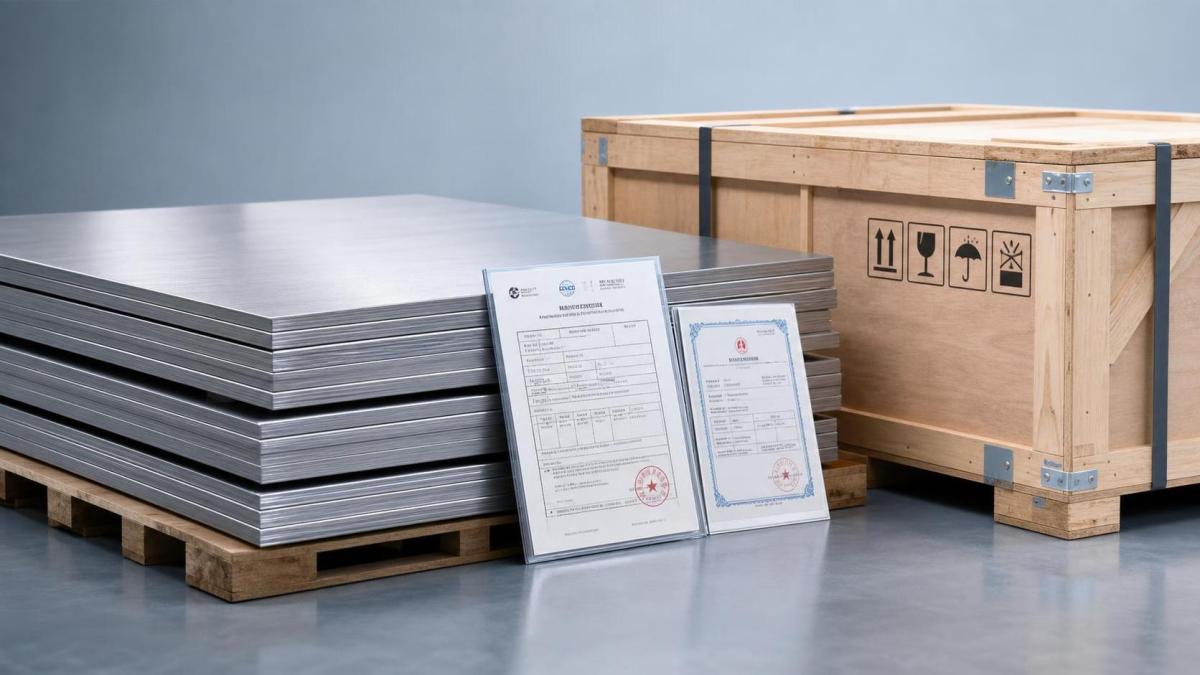
Capacity matters too, but not in the abstract. You do not need the supplier with the biggest factory; you need one that can consistently supply your plate dimensions, quantity, and documentation level. Ask what thickness range they actually handle for alloy plates, whether they process cutting in-house, and how they manage mixed orders. A supplier familiar with nickel-based and corrosion-resistant materials is often better equipped to support Monel procurement than a general steel trader with only occasional alloy business.
Paperwork Is Not an Admin Detail
In this category, documentation errors can hold up customs clearance, site approval, or fabrication release. That is why experienced buyers check the supplier’s document discipline early. Ask to see how they manage packing lists, certificates, marking records, and traceability from heat number to finished plate. If your project involves EPC contractors, marine applications, or regulated sectors, document consistency may matter as much as the metal itself.
Do not assume every claim on a brochure is verified. If a supplier mentions certifications, approvals, or testing capabilities, request the exact scope and validity. Where information is incomplete, treat it as 【待核实】 until confirmed. This sounds basic, but many supply disputes begin with assumptions made during the quotation phase.
Another point people miss: ask how the supplier handles nonstandard requests. For example, mixed dimensions, urgent replacement plates, or special packaging for export. This is where you learn whether they are just forwarding inquiries or actually managing alloy supply. Some companies that work across corrosion-resistant and high-temperature materials can be more useful here, especially when a project involves adjacent items beyond Monel plate. In those cases, related products such as High-Temperature Alloy Steel Strips may appear in the same procurement discussion, particularly for buyers covering heat exchangers, industrial furnaces, power plants, or aerospace-related components.
Commercial Terms Need Technical Logic Behind Them
When comparing offers, do not look only at total price. Break it down. Is the quote based on actual available stock? Does it include cutting, testing, marking, export packing, and document handling? Are lead times tied to production slots or stated loosely? A lower unit price can hide avoidable costs if the supplier later adds surcharges for inspection, short lead time, or packaging upgrades.
Payment terms also tell you something. Extremely rigid terms do not automatically mean a supplier is stronger, and overly flexible terms do not automatically mean they are trustworthy. What matters is whether the commercial offer matches the reality of the material and the order size. For custom alloy production, some prepayment is common. For repeat orders with established stock flow, terms may be more flexible. What you want is consistency between technical risk and commercial structure.
If your company buys for multiple high-performance applications, it helps to ask whether the supplier understands the difference between corrosion-driven selection and temperature-driven selection. Monel Alloy Steel Plate is usually evaluated for corrosion resistance and service reliability in specific media, while products like high-temperature strips are judged more by oxidation resistance, thermal stability, and operating temperature windows such as roughly 650°C to 1000°C depending on alloy composition and grade. A supplier that can discuss those boundaries clearly is usually easier to work with on mixed alloy procurement.
A Short Final Screen Before Approval
Before you approve a Monel Alloy Steel Plate supplier, run one last practical screen:
- Re-read the quotation and make sure the grade, size, quantity, and document list match your RFQ exactly.
- Check whether sample certificates and markings are clear enough for your internal QA team.
- Ask who will handle after-sales issues if there is a material or document discrepancy.
- Verify shipping timeline against your actual fabrication schedule, not just requested delivery date.
- Keep a written record of every technical confirmation.
That last point saves a lot of trouble. In alloy purchasing, many disputes are not caused by bad intent. They come from unrecorded assumptions: one side quoted plate condition A, the other expected condition B; one side assumed stock material, the other expected new rolling. Clear records reduce that risk.
A capable supplier should make your decision easier by being specific, traceable, and consistent. If you have to keep translating vague answers into technical meaning, keep looking. For Monel Alloy Steel Plate procurement, clarity is usually a better predictor than a polished sales pitch.
