


News
- ▶ How to prevent coil damage during delivery from a Monel 400 supplier
- ▶ How to compare freight costs from a monel 400 Coil supplier
- ▶ How coil edge quality affects stamping with Monel 400
- ▶ How to confirm temper requirements with a monel 400 Coil supplier
- ▶ When dual sourcing from an Inconel 625 Supplier reduces risk
Message
Types Of Nickel Alloys: Complete Guide To Nickel-Based Alloys
When a component must survive hot gas, aggressive acid, chloride-bearing seawater, or years of pressure cycling, ordinary stainless steel may no longer be enough. That is where nickel alloys enter the conversation. A practical understanding of the types of nickel alloys helps engineers, buyers, and maintenance teams narrow a large materials market into choices that make sense for the actual operating environment.
Nickel-based alloys are not one material family with one behavior. Their performance comes from carefully balanced additions of chromium, molybdenum, iron, copper, cobalt, tungsten, and other elements. Some grades are designed to remain strong at elevated temperatures; others are selected because they resist reducing acids, oxidizing chemicals, seawater, or stress corrosion cracking. The best alloy is rarely the one with the most impressive data sheet. It is the one that fits the corrosion mechanism, temperature range, fabrication route, and service life required.
What makes nickel-based alloys different?
Nickel provides a stable, tough matrix that retains useful mechanical properties across a wide temperature range. By changing the alloy chemistry, manufacturers can tailor resistance to particular forms of attack. Chromium generally improves oxidation and oxidizing-acid resistance. Molybdenum strengthens resistance to pitting, crevice corrosion, and reducing acids. Copper is valuable in certain marine and sulfuric-acid duties, while cobalt and refractory elements support high-temperature strength.
This is why material selection should begin with the medium, not just the industry name. “Chemical processing” can mean dilute sulfuric acid at moderate temperature, wet chlorine, hydrochloric acid, or a mixed stream with chlorides—conditions that may point to very different alloy families.
Major types of nickel alloys and where they fit
Nickel-chromium high-temperature alloys
Often recognized through the INCONEL family name, nickel-chromium alloys are widely used where oxidation resistance and elevated-temperature strength are both important. Chromium forms a protective oxide scale, while nickel helps preserve structural stability under heat. Typical applications include furnace components, gas-turbine parts, exhaust systems, combustion equipment, and high-temperature fasteners.
These alloys are not automatically the right answer for every corrosive liquid. Their value is strongest in hot, oxidizing atmospheres and demanding thermal cycles. For wet acids or chloride-rich process streams, a molybdenum-containing corrosion-resistant alloy may offer a more appropriate balance.
Nickel-iron-chromium alloys
INCOLOY grades generally contain more iron than many nickel-chromium superalloys, creating a useful combination of heat resistance, oxidation resistance, and relatively controlled material cost. They are common in industrial heating, petrochemical equipment, heat-treatment fixtures, and some power-generation systems.
For projects operating at sustained high temperatures, buyers should look beyond a grade name and compare creep strength, allowable stress, oxidation behavior, and the anticipated number of thermal cycles. A material that performs well during occasional heat exposure may not be suitable for long-duration service.
Nickel-molybdenum-chromium corrosion-resistant alloys
This group includes many Hastelloy alloys, among the most widely specified materials for severe chemical environments. Molybdenum supports resistance to reducing acids and localized corrosion, while chromium helps in oxidizing conditions. Certain grades also include tungsten or carefully controlled iron and cobalt contents to refine their corrosion and mechanical performance.
Hastelloy C-276 and C-22 are frequently considered for chemical reactors, piping systems, scrubbers, valves, pumps, and heat exchangers exposed to mixed acids, chlorides, or oxidizing-reducing process conditions. B-2 and B-3 are associated more closely with reducing environments, particularly where hydrochloric acid resistance is required. Hastelloy X, by contrast, is known for high-temperature strength and oxidation resistance in aerospace and industrial heat applications.
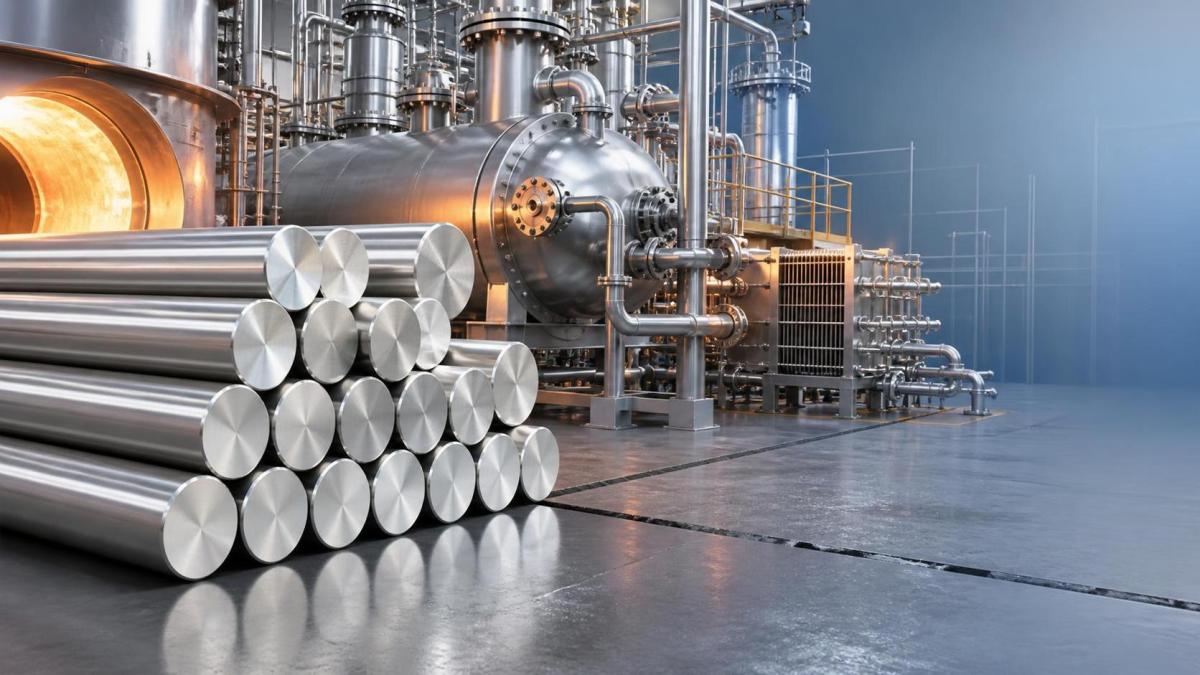
For bar-stock components such as shafts, bolts, valve stems, and machined reactor parts, Hastelloy Alloy Rods are available in grades including C-276, C-22, B-2, B-3, and X. Depending on the grade and processing route, rods can be hot rolled, cold finished, or forged, with diameters ranging from 5 mm to more than 150 mm. They are commonly supplied to standards such as ASTM B574, ASTM B575, ASTM B619, AMS 5580, and ASME SB-574 where applicable. Always confirm the exact standard, condition, and chemical limits required by the project specification.
Nickel-copper alloys
Monel alloys are primarily nickel-copper materials valued for resistance to seawater, brackish water, hydrofluoric acid in certain conditions, and marine biofouling environments. Their toughness and corrosion behavior make them familiar in pump shafts, marine valves, propeller-related hardware, offshore equipment, and some oil and gas systems.
Monel is a strong candidate when seawater is central to the service condition, but it should not be selected simply because a system is “marine.” Flow rate, temperature, oxygen content, galvanic coupling, and stagnant crevice conditions still matter. A well-chosen alloy can fail prematurely if installation details create an unfavorable electrochemical environment.
Commercially pure nickel and nickel-rich grades
Pure nickel and low-alloy nickel grades are useful in caustic alkali service, food-processing equipment, electronics, and selected chemical applications. They can offer excellent resistance to sodium hydroxide and other alkaline media, but their performance in oxidizing acids differs sharply from that of nickel-chromium-molybdenum alloys. This category illustrates a key rule of alloy selection: corrosion resistance is always environment-specific.
Nickel-cobalt and precipitation-strengthened superalloys
For turbines, aerospace engines, hot-section hardware, and advanced energy systems, nickel-cobalt-based and precipitation-hardened superalloys provide exceptional strength at temperatures where many metals soften rapidly. Their microstructures are engineered for creep resistance, fatigue performance, and thermal stability. These materials often demand tightly controlled melting, forging, heat treatment, and inspection, making supplier capability especially important.
A quick selection view
Questions to ask before specifying a grade
A grade designation alone is not a complete material specification. Before placing an order, define the process fluid and its concentration, normal and upset temperatures, operating pressure, flow conditions, chloride level, and whether deposits or crevices can form. For elevated-temperature equipment, include time at temperature, thermal cycling, load, and oxidation atmosphere.
Fabrication also deserves attention. Some nickel alloys machine more slowly than carbon steel and may work harden during cutting. Welding procedures, filler metals, heat input, post-weld cleaning, and solution annealing requirements can all affect corrosion performance. If a component will be welded and then exposed to corrosive media, selecting a weldable alloy is only part of the task; the fabrication procedure must protect the material’s intended properties.
Cost is another real consideration. Nickel, molybdenum, and tungsten contribute substantially to alloy pricing. Yet choosing a cheaper material that requires frequent replacement, causes contamination, or creates an unplanned shutdown can be far more expensive over the equipment lifecycle. A useful comparison weighs installed cost against inspection intervals, maintenance risk, and consequences of failure.
Common mistakes in nickel alloy selection
- Choosing by brand name alone: Different grades within the same family can behave very differently in acids, chlorides, and high-temperature gases.
- Ignoring localized corrosion: General corrosion rates may look acceptable while pitting or crevice attack remains a serious risk.
- Overlooking product form: Plate, pipe, rod, wire, and forgings may have different available standards, tolerances, and processing histories.
- Using temperature as the only criterion: Temperature, chemistry, stress, and time interact; no single property tells the whole story.
- Skipping traceability: Material test certificates, heat numbers, dimensional inspection, and specification review are essential for critical parts.
Making the final choice with confidence
The many types of nickel alloys exist because demanding service conditions are rarely simple. INCONEL and INCOLOY families address heat and oxidation challenges; Hastelloy grades target difficult chemical environments; Monel and nickel-copper alloys serve marine and selected acid duties; specialized nickel-cobalt materials extend performance in extreme-temperature systems.
For procurement teams and design engineers, the most reliable path is to match a documented service condition with alloy chemistry, product form, applicable standard, and fabrication plan. Shandong Titanium Nickel Special Steel supplies a broad range of nickel-based, iron-based, copper-nickel, titanium, zirconium, and other special alloy materials, supporting applications where material reliability is not a minor detail but the foundation of safe, durable equipment.
