


News
- ▶ How to prevent coil damage during delivery from a Monel 400 supplier
- ▶ How to compare freight costs from a monel 400 Coil supplier
- ▶ How coil edge quality affects stamping with Monel 400
- ▶ How to confirm temper requirements with a monel 400 Coil supplier
- ▶ When dual sourcing from an Inconel 625 Supplier reduces risk
Message
Nickel Alloys For Oil And Gas Applications
Nickel alloys occupy a relatively small share of total material volume in oil and gas projects, yet they often determine whether a well completion, subsea system, or processing train can operate safely for decades. Their role is most visible where conventional carbon steel, low-alloy steel, and even stainless steel face a combination of chlorides, hydrogen sulfide, carbon dioxide, elevated temperature, pressure, and difficult inspection access.
The important procurement question is not whether nickel alloys are “better” than other metals. It is whether their additional cost is justified by the actual failure mechanisms expected throughout the equipment’s operating life. In many oil and gas applications, an alloy chosen only on nominal corrosion resistance can still fail through sulfide stress cracking, crevice corrosion, galvanic effects, weld-related degradation, or inadequate product traceability.
Why oil and gas environments make material selection difficult
Oil and gas fluids are rarely stable, uniform media. A production stream may contain hydrocarbons, formation water, dissolved CO2, H2S, chlorides, solids, treatment chemicals, and oxygen introduced during shutdowns or water-handling operations. Temperature, pressure, water cut, and fluid chemistry can change significantly from initial production to late-life operation.
“Sour service” is a central concern. When hydrogen sulfide is present, susceptible metallic materials can experience sulfide stress cracking and hydrogen-related damage under tensile stress. Chlorides intensify the challenge by increasing the likelihood of localized corrosion, especially at elevated temperatures. Carbon dioxide, meanwhile, can produce severe CO2 corrosion where protective scales are absent or unstable.
This explains why material selection must be tied to a defined service envelope rather than a broad description such as “offshore” or “corrosive.” The relevant inputs include:
- H2S partial pressure, CO2 content, pH, chlorides, and free-water conditions;
- maximum and minimum metal temperature, including upset and shutdown conditions;
- pressure, tensile loading, cyclic fatigue exposure, and required strength level;
- crevices, stagnant zones, deposits, insulation, and seawater exposure;
- welding method, post-weld condition, and the feasibility of inspection and repair.
For sour-service qualification, NACE MR0175/ISO 15156 is commonly used as a key reference in upstream oil and gas. It is not a shortcut for alloy selection: the standard’s applicability depends on material form, hardness, heat treatment, environmental limits, and other specific conditions. A purchase order stating only “NACE compliant” is therefore not sufficient for critical components.
Where nickel alloys earn their place
Nickel-based and nickel-containing alloys are typically selected when corrosion resistance must be retained under conditions that exceed the practical limits of standard stainless steels or when high mechanical strength is needed alongside corrosion performance.
Nickel alloy 825, often known as Incoloy 825, is used in selected tubing, piping, and process-service duties where resistance to reducing and oxidizing acids, chloride environments, and sour conditions is required within its qualified limits. Its balance of nickel, chromium, molybdenum, copper, and titanium gives it a useful position between stainless steels and more highly alloyed nickel materials.
Alloy 625, commonly marketed as Inconel 625, is widely associated with subsea equipment, clad pipe, valve components, flexible-pipe layers, and weld overlay applications. Its high nickel, chromium, and molybdenum content provides strong resistance to many chloride-bearing and sour environments, while niobium contributes to strength. It is also valued for weldability, although welding procedures and dilution control remain important when it is applied as overlay.
Alloy C-276 is generally considered for especially aggressive chemical environments, including conditions involving reducing acids, chlorides, and oxidizing contaminants. In oil and gas operations, it may be appropriate for chemical injection equipment, selected process components, and highly corrosive localized services. It is not automatically the right answer for every sour environment; cost, mechanical requirements, fabrication route, and environmental qualification still matter.
Monel 400 and precipitation-strengthened K-500 have long histories in marine and seawater-related service. Their resistance to flowing seawater is valuable in certain pump, valve, shaft, and marine applications. However, their use should be reviewed carefully where high strength, sour exposure, galvanic coupling, or crevice conditions are involved. A material with good general seawater behavior is not necessarily suitable for every offshore duty.
Nickel alloy 718 is an important high-strength material for downhole tools, completion equipment, and fasteners where strength at temperature is critical. It is frequently grouped with corrosion-resistant alloys in commercial discussions, but its suitability depends heavily on specified heat treatment, hardness, microstructure, and sour-service limits. Confusing “Inconel” as a general label with a defined, qualified material condition is a recurring and costly mistake.
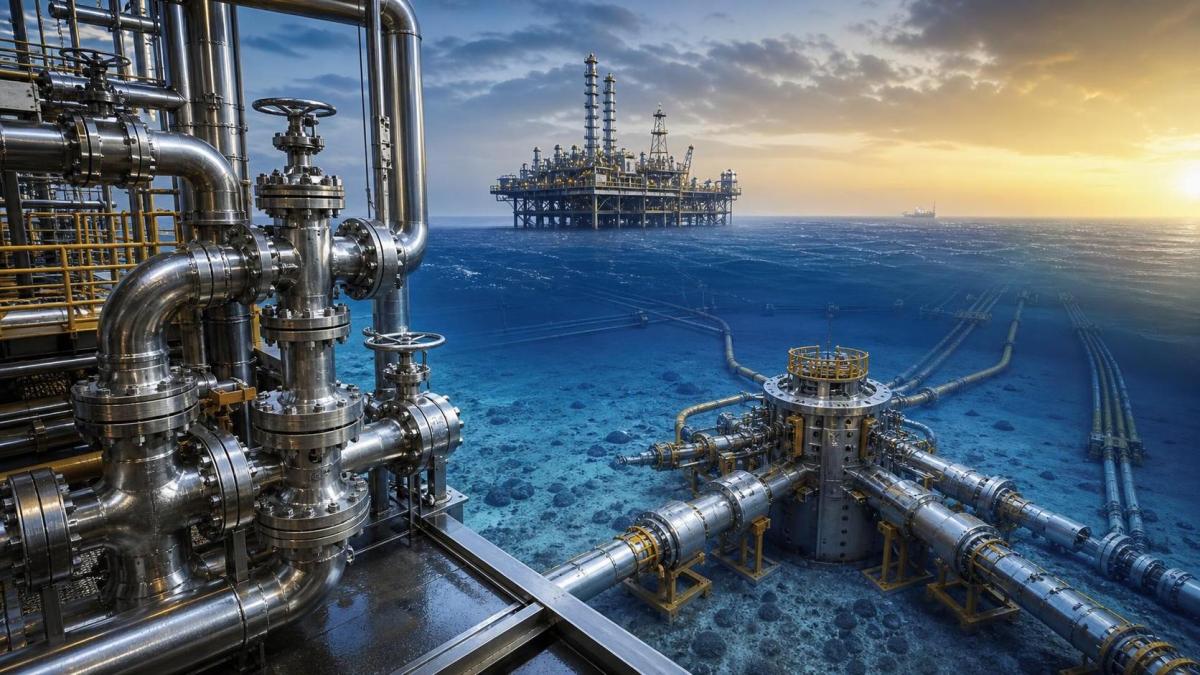
Solid alloy, clad pipe, or weld overlay: the economic decision is often here
For large-diameter piping, risers, manifolds, and vessels, solid nickel alloy construction may be technically straightforward but commercially difficult to justify. Clad line pipe and mechanically lined pipe can reduce the amount of corrosion-resistant alloy required by placing it only on the wetted surface. Weld overlay can similarly protect valve bores, connectors, pressure-containing surfaces, and repair zones.
These options introduce their own risks. Clad pipe requires attention to bond integrity, liner thickness, end preparation, field-joint design, and possible disbonding or damage during installation. Weld overlay requires control of base-metal dilution, overlay chemistry, thickness after machining, porosity, cracking, and non-destructive examination. The nominal alloy designation of the filler wire alone does not prove that the final overlay has the intended corrosion resistance.
Where equipment geometry is complex or local corrosion is the dominant concern, thermal spray and laser-cladding approaches may also be evaluated as surface-engineering options. Powder selection is process-specific: particle size distribution, chemistry, flowability, oxygen content, and deposition method influence coating quality as much as the stated alloy family. For projects assessing repair or protective-surface strategies, Refractory Metal Powders for Ultra-High Temperature Service illustrates the broader category of powder-based materials used in laser cladding, PTA hardfacing, and thermal-spray processes. These routes should not be treated as interchangeable with qualified CRA weld overlay in pressure-critical sour-service equipment.
The overlooked failure points: connections, welds, and mixed-metal systems
Many premature failures occur not in the parent material but at interfaces. Threaded connections, seal areas, weld heat-affected zones, overlay transitions, bolted joints, and dead legs often create the most severe local conditions. Crevice geometry can concentrate chlorides and alter pH, making an otherwise acceptable alloy vulnerable.
Galvanic corrosion also deserves practical attention. When a nickel alloy is electrically coupled to carbon steel or another less noble material in an electrolyte, the less noble material may corrode more rapidly. The final design may need electrical isolation, coating strategy, controlled area ratios, or corrosion allowance. This is particularly relevant in offshore assemblies combining CRA internals, carbon-steel structures, and seawater exposure.
Welding cannot be separated from the alloy decision. The welding consumable, heat input, interpass temperature, shielding, cleaning, joint geometry, and post-weld inspection all influence service reliability. Procurement teams should request qualified welding procedure specifications where relevant and ensure that the supplied condition matches the design basis. Material test certificates are necessary, but for critical sour service they are only one element of the quality record.
How buyers should compare nickel alloy offers
A low unit price can conceal a high project risk when quotations are compared only by UNS grade or trade name. “Hastelloy,” “Monel,” and “Inconel” are widely used commercial family names; they do not replace a complete specification. The purchase package should define the relevant UNS designation, product form, dimensions and tolerances, heat treatment, mechanical-property requirements, corrosion or sour-service qualification, testing scope, and documentation requirements.
For bar, forgings, fittings, plate, pipe, wire, and powder, the manufacturing route matters. Melting practice, remelting requirements where specified, hot-working control, solution annealing, surface condition, and traceability affect consistency. For downhole parts and pressure-retaining components, a buyer may also need hardness mapping, positive material identification, ultrasonic testing, liquid penetrant testing, dimensional records, and third-party inspection according to the project specification.
Lead time should be assessed early. Nickel alloy availability is not simply a question of mill stock. A particular size, forged geometry, seamless tube requirement, or customer-specific qualification may require a much longer production cycle than standard material. Volatility in nickel, molybdenum, and alloying-element markets can also affect quotation validity and project budgeting.
A practical selection hierarchy
Reliable selection starts by identifying the credible corrosion mechanism, then selecting a material system proven for that mechanism under the specified operating envelope. Only after that should the project compare solid CRA, clad construction, overlay, or localized protection methods. Mechanical design, fabrication feasibility, inspection access, and lifecycle consequence must remain part of the same decision.
In oil and gas, nickel alloys are most valuable where they remove a failure mode that cannot be economically managed through corrosion allowance, inhibition, coating, or routine replacement. Their premium is easier to defend in deepwater subsea systems, high-H2S wells, chemical injection equipment, seawater-exposed critical components, and assets where intervention is costly or unsafe. In less severe service, over-specification can add cost without improving the real risk profile.
The strongest material decisions are therefore not driven by alloy brand recognition. They are based on fluid chemistry, temperature and pressure limits, product form, fabrication condition, qualification evidence, and the operational consequence of failure. That discipline is what turns nickel alloys from an expensive material choice into a controlled reliability strategy.
