


News
- ▶ How to prevent coil damage during delivery from a Monel 400 supplier
- ▶ How to compare freight costs from a monel 400 Coil supplier
- ▶ How coil edge quality affects stamping with Monel 400
- ▶ How to confirm temper requirements with a monel 400 Coil supplier
- ▶ When dual sourcing from an Inconel 625 Supplier reduces risk
Message
Nickel Alloys For Chemical Processing Equipment
Nickel alloys for chemical processing equipment are selected when ordinary stainless steels cannot maintain integrity in corrosive, high-temperature, or chemically unstable service. Their performance comes from carefully balanced nickel, chromium, molybdenum, copper, iron, and other alloying elements that form protective surface films and retain useful strength under heat. The correct grade depends on the actual fluid chemistry, concentration, temperature, pressure, flow pattern, contamination risk, and operating cycle rather than on the chemical name alone.
Reactors, evaporators, scrubbers, condensers, transfer lines, valves, pump components, and pressure vessels may all encounter different corrosion mechanisms within one process. An alloy that performs well in a bulk acid solution can still fail near a crevice, beneath a deposit, at a vapor-liquid interface, or in a stagnant branch line. Material selection therefore begins with defining the full operating envelope, including start-up, cleaning, upset conditions, shutdown exposure, and any concentration changes caused by evaporation.
Corrosion Conditions That Drive Alloy Selection
Nickel-based materials are widely used where reducing acids, chloride-bearing streams, caustic solutions, wet halides, or mixed chemical media create risks that conventional materials may not tolerate. Chromium generally supports resistance to oxidizing conditions, while molybdenum is often important where pitting and crevice corrosion are concerns. Higher nickel content can improve resistance to reducing environments and reduce susceptibility to chloride stress corrosion cracking in many applications.
However, no alloy should be selected from a general corrosion table without reviewing the specific process. Sulfuric acid behavior can change materially with concentration and temperature. Hydrochloric acid service may require very different material choices depending on dissolved oxidizers, ferric contamination, aeration, and velocity. Alkaline service can also become aggressive when temperature rises or when the medium is concentrated. Chloride concentration alone is not enough to predict performance because oxygen content, deposits, local heating, and residual stresses can alter the exposure substantially.
Crevice corrosion deserves particular attention in gasketed joints, lap joints, tube-to-tubesheet regions, threaded fittings, support clamps, and insulated piping. A narrow gap can become chemically different from the surrounding process fluid as oxygen is depleted and corrosive species concentrate. Smooth geometry, suitable gasket design, drainage, and removal of dead legs are often as important as the nominal alloy grade.
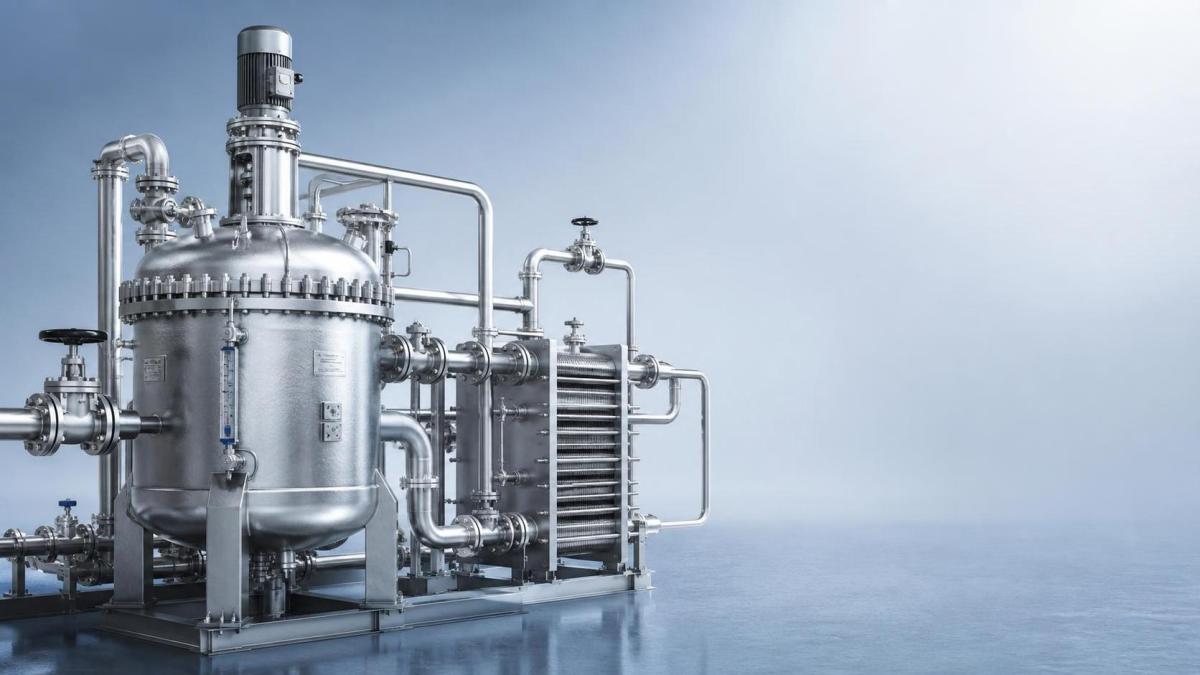
Matching Materials to Equipment Functions
Equipment form affects the material decision. A thin heat-exchanger tube may be governed by localized corrosion resistance and thermal performance, while a pressure-vessel shell must also meet strength, weldability, forming limits, and thickness availability. Piping systems introduce issues such as erosion-corrosion at elbows, crevice attack beneath supports, galvanic interaction with adjacent metals, and expansion stress at rigid connections.
Nickel-chromium-molybdenum alloys are often considered for severe acidic or chloride-containing duties because they can offer broad resistance across mixed process conditions. Nickel-copper alloys are useful in selected fluoride, seawater, brine, and certain acidic services, subject to confirmation against the actual medium. Nickel-iron-chromium materials may suit elevated-temperature oxidation or moderately corrosive environments where thermal stability and fabrication characteristics are significant. The final choice should be supported by current technical data and, where the chemistry is unusual, corrosion testing or specialist review.
For plate-fabricated components exposed to chloride-containing aqueous streams or acidic condensates, Monel Alloy Steel Plate may be considered where a nickel-copper alloy is compatible with the process chemistry. Monel 400 is known for good ductility, corrosion resistance in many marine and chemical environments, and practical welding characteristics. Monel K-500 has higher strength through age hardening, but its different fabrication and heat-treatment requirements should be accounted for when it is used in stressed components.
Mechanical and Thermal Design Must Be Considered Together
Corrosion resistance alone does not establish suitability. Design temperature affects allowable stress, creep behavior, thermal expansion, fatigue response, and the stability of protective surface films. A material that is satisfactory at ambient temperature may require a revised thickness calculation or a different grade at elevated temperature. Thermal gradients across tube sheets, vessel heads, and welded transitions can introduce high local stress even when the overall operating pressure is moderate.
Nickel alloys commonly have different thermal expansion behavior from carbon steel, stainless steel, titanium, or lined construction. Mixed-material assemblies should therefore be examined for differential movement during heat-up and cool-down. Expansion loops, flexible connectors, sliding supports, and joint design may need adjustment. Rigidly attaching a high-alloy process line to a carbon-steel structure without considering movement can load welds, flanges, and nozzles beyond their intended service condition.
Velocity also matters. Low flow can encourage deposits and concentration cells, while excessive velocity may strip protective films or accelerate erosion at restrictions. Slurries, entrained solids, flashing liquid, and two-phase flow should be identified separately from clean liquid service. A straight pipe may appear satisfactory while elbows, pump inlets, control valves, and impingement zones deteriorate first.
Fabrication Controls That Protect Corrosion Performance
Nickel alloys require disciplined handling during cutting, forming, welding, and finishing. Carbon-steel contamination from shared grinding wheels, wire brushes, handling tables, or shot-blasting media can create rust staining and may initiate localized attack. Dedicated tools or verified clean work areas reduce this risk. Surface condition should be specified where it affects service performance; pickled and cleaned surfaces are commonly preferred for corrosive process equipment because embedded scale and heat tint can impair corrosion resistance.
Cold forming may increase strength but can leave residual stress. When chloride stress corrosion cracking, caustic cracking, or fatigue is a concern, forming history and any required stress-relief treatment should be reviewed as part of the fabrication procedure. Forming radii should be appropriate for the chosen plate thickness and alloy condition to avoid excessive work hardening or edge cracking.
Welding procedure qualification should address the base alloy, filler metal, joint configuration, heat input, interpass control, shielding gas, and cleaning between passes. The filler should generally be selected to maintain corrosion resistance across the weld zone, not merely to match room-temperature strength. Excessive heat input can increase distortion and alter local microstructure, while inadequate shielding may leave oxidized surfaces that require proper cleaning. Root-side protection is especially important for piping and thin-wall equipment carrying corrosive fluids.
- Specify material form, condition, thickness range, and required traceability before fabrication begins.
- Keep sulfur-bearing marking materials, chlorinated cleaners, and unverified cutting fluids away from wetted alloy surfaces.
- Inspect weld profiles and transitions where stagnant liquid, deposits, or crevices could develop during operation.
- Record repair welding and post-weld surface treatment because these details can affect later inspection findings.
Receiving, Storage, and Installation Details
Incoming plate, strip, pipe, fittings, and bar should be verified against the intended material designation, heat documentation, dimensions, and surface condition. Positive material identification may be appropriate for components that will become inaccessible after assembly or for systems using several visually similar alloys. Material mix-ups are a recurring risk when nickel alloys, stainless steels, and carbon steels are stored together.
During transport and storage, dry separation from carbon steel and protection from salt, moisture, and chemical residues are sensible precautions. Direct contact with carbon-steel racks is not always immediately harmful, but trapped moisture and iron contamination can complicate later cleaning and inspection. Protective films should be removed only when they no longer serve a handling purpose, and adhesive residues should not remain on hot process surfaces.
Installation quality often determines whether the selected alloy can achieve its expected service life. Flange faces need correct alignment so bolt loading does not distort the joint. Gaskets must be chemically compatible and suitable for the temperature cycle. Pipe supports should avoid tight moisture traps, and insulation systems should be designed to limit ingress of chlorides and water where external corrosion under insulation is possible. Hydrostatic testing water requires attention as well; prolonged exposure to contaminated or high-chloride test water can create avoidable surface attack in susceptible systems.
Inspection During Service
A useful inspection plan follows the likely degradation mechanism instead of applying the same interval to every component. Heat-exchanger tubes may require eddy-current examination where wall loss or pitting is expected. External visual inspection can reveal leakage staining, damaged insulation, failed supports, or crevice-prone deposits. Thickness monitoring is more informative when taken at known high-risk locations such as elbows, injection points, vapor zones, and areas downstream of pressure-reducing devices.
When a corrosion indication appears, the investigation should preserve evidence of the process condition. Cleaning a surface before documenting deposits, attack pattern, nearby welds, and fluid history can remove clues needed to distinguish general corrosion, pitting, under-deposit corrosion, galvanic effects, or mechanical damage. The remedy may involve a material change, but it may instead require correcting flow distribution, eliminating a crevice, improving drainage, changing cleaning chemistry, or controlling contamination.
Reliable chemical processing equipment is built from a material decision that remains connected to fabrication, installation, and operating reality. Nickel alloys offer a broad range of resistance and high-temperature capability, yet their value depends on matching the alloy and product form to the most severe credible condition within the system.
