


News
- ▶ Can a Hastelloy C276 manufacturer supply custom plate dimensions
- ▶ Why melt route matters when selecting a Hastelloy C276 manufacturer
- ▶ How a Hastelloy C276 manufacturer proves corrosion resistance
- ▶ What to evaluate in a Hastelloy C276 manufacturer for chemical plants
- ▶ When to source Inconel 625 from a manufacturer instead of stock
Message
Can a Hastelloy C276 manufacturer supply custom plate dimensions
When sourcing corrosion-resistant alloy plate, procurement teams often need dimensions beyond standard stock sizes. A qualified Hastelloy C276 Manufacturer can supply custom widths, lengths, and thicknesses.
The practical answer is yes, but capability depends on mill route, starting material availability, final processing, inspection requirements, and order volume. Buyers should define requirements before requesting quotations.
What Custom Plate Dimensions Can a Hastelloy C276 Manufacturer Supply?
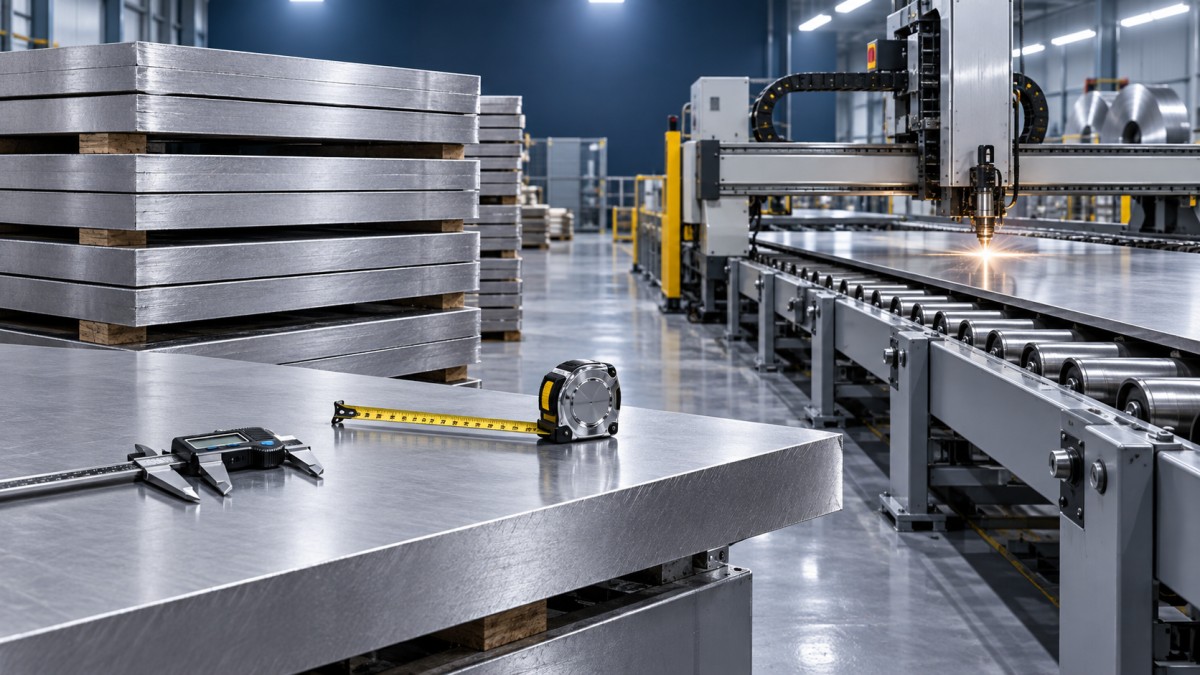
Most experienced suppliers can provide Hastelloy C276 plate in customized thicknesses, widths, and lengths, subject to rolling equipment limits, flatness requirements, and minimum production quantities.
Custom thickness commonly ranges from thin sheet sizes through heavy plate dimensions used for reactors, scrubbers, flue-gas systems, pressure vessels, and marine chemical handling equipment.
Width and length customization is often more economical when based on standard mill parent plates. Cutting a larger plate to required dimensions usually offers faster delivery.
Fully nonstandard rolling dimensions may also be possible, especially for recurring industrial projects. However, this route generally requires larger tonnage commitments and longer manufacturing lead times.
Procurement teams should distinguish between “cut-to-size” supply and “mill-rolled custom plate.” Both meet dimensional needs, but their commercial terms, availability, and delivery schedules differ.
For one-time maintenance work, cut-to-size plate is usually the practical choice. For serial equipment production, custom rolling can reduce trimming waste and improve material utilization.
Start With a Complete Dimensional Specification
A quotation request should state nominal thickness, width, length, quantity, unit weight, and acceptable dimensional tolerances. Vague requests create avoidable pricing differences between suppliers.
Thickness should identify whether the requirement applies before or after surface finishing. Grinding, pickling, leveling, or polishing can affect final measurements and surface condition.
Buyers should also specify whether dimensions are required in millimeters or inches. Conversions should never be assumed when fabrication drawings contain tight tolerances.
Length and width tolerances matter particularly when plates feed automated welding, laser cutting, waterjet cutting, or CNC nesting operations. Consistent plate geometry reduces downstream adjustment time.
Flatness requirements deserve equal attention. A plate may meet thickness tolerance but still create fabrication problems if distortion affects fit-up, forming, or automated handling.
For pressure-retaining components, purchasers should include applicable drawing revisions, formed-part requirements, edge conditions, and any required ultrasonic testing areas within the request package.
Custom Dimensions Must Match the Actual Fabrication Process
The correct plate size is not always the finished component size. Buyers should calculate material allowances for cutting kerf, forming, welding preparation, machining, and inspection coupons.
For fabricated vessels, additional edge allowance may be needed for rolling and seam preparation. Ordering exact finished dimensions can leave insufficient material for qualified fabrication.
Heavy Hastelloy C276 plate may require hot forming or specialized cold-forming controls. The required bend radius and forming direction can influence preferred rolling orientation.
When plate will be welded, buyers should consider whether supplied edges need square cutting, beveled preparation, or additional machining allowance for shop-specific joint designs.
Chemical processing equipment often includes large linings, transition sections, and irregular shapes. Nesting drawings help a Hastelloy C276 Manufacturer recommend dimensions that minimize offcuts.
This review is valuable because C276 is a premium alloy. Reducing scrap has a direct effect on project cost, especially where multiple small components share one parent plate.
Material Verification Is More Important Than Plate Size Alone
Custom dimensions provide little value if alloy chemistry, heat treatment, or traceability does not satisfy the service environment. Documentation must be evaluated alongside dimensional capability.
Hastelloy C276 is valued for resistance to localized corrosion, oxidizing and reducing media, chlorides, and many aggressive process chemicals. Its performance depends on correct composition.
Request a material test certificate showing heat number, chemical composition, mechanical properties, dimensions, and applicable product specification. Certificates should correspond directly to delivered plate markings.
Procurement teams should verify the governing standard required by their project, such as ASTM, ASME, EN, or customer-specific specifications. Equivalent descriptions are not always interchangeable.
For critical applications, ask whether plates receive solution annealing, pickling, and surface cleaning after rolling. These processing details can influence corrosion performance and fabrication quality.
Third-party inspection may be justified for high-value orders. Typical checks include positive material identification, ultrasonic examination, dimensional inspection, surface review, and certificate verification before shipment.
How Tolerances Affect Cost, Lead Time, and Production Risk
Tighter tolerances are achievable, but they may require additional leveling, machining, grinding, or inspection. Buyers should request only the tolerances necessary for their manufacturing process.
Excessively restrictive requirements can increase cost without improving the final component. A fabrication team should confirm which dimensions truly require precision before issuing the purchase order.
Thickness tolerance is often governed by the relevant plate standard, while width, length, squareness, and flatness may require separate agreement. These details belong in written technical conditions.
Specify the edge condition clearly: mill edge, sheared edge, saw-cut edge, plasma-cut edge, or machined edge. Each option produces different accuracy, finish, and preparation requirements.
Buyers should also confirm whether dimensional inspection occurs before or after cutting. This prevents disputes when a supplier uses standard parent plate tolerances for cut pieces.
A practical request asks suppliers to identify their achievable tolerances, measurement methods, and acceptance criteria. Transparent agreement protects both the purchaser and the material producer.
Lead Time Depends on the Customization Route
Stock plate cut to requested size is normally the fastest option, provided the required thickness and heat are available. Processing time still depends on cutting and inspection scope.
When stock is unavailable, the supplier may need to source parent plate, schedule rolling, complete heat treatment, and perform testing. Lead time increases accordingly.
Custom mill rolling generally has the longest delivery cycle because it requires production planning, raw material allocation, rolling capacity, heat treatment, testing, and final dimensional processing.
Urgent projects benefit from early communication about alternatives. A supplier may recommend adjacent standard thicknesses, multiple cut pieces, or revised nesting plans to meet a deadline.
Do not evaluate delivery only by the date shown on a quotation. Confirm whether that date includes certificates, inspection release, export packing, and transportation to the project location.
For international procurement, ask about packaging suitable for corrosion-resistant alloy plate. Plates require secure protection from moisture, surface damage, handling impacts, and mixed-material identification errors.
Compare Suppliers Beyond the Lowest Plate Price
A low quotation may exclude cutting, testing, certification, packing, or dimensional verification. Procurement teams should compare complete delivered scope rather than unit price alone.
Ask each Hastelloy C276 Manufacturer whether it controls production directly, processes stocked material, or acts solely as a trading source. The answer affects traceability and schedule control.
Manufacturing experience across nickel alloys can be useful when projects require several materials. Shandong Titanium Nickel Special Steel supplies corrosion-resistant, high-temperature, titanium, zirconium, nickel, and cobalt-based alloy materials.
For related applications involving elevated temperatures or demanding corrosion conditions, buyers may also review Nickel-based Alloy Steel Sheets for material options including Inconel 718, Inconel 625, and Nimonic 75.
These alloys are not automatic replacements for C276. Selection must follow the actual medium, temperature, pressure, mechanical loading, welding method, and governing engineering specification.
Reliable suppliers should explain limitations openly, including maximum plate sizes, minimum order quantities, achievable tolerances, available inventory, and any uncertainty requiring engineering confirmation.
A Procurement Checklist Before Placing the Order
Before issuing a purchase order, confirm alloy grade, standard, heat treatment condition, thickness, width, length, quantity, tolerance, flatness, surface finish, and required edge condition.
Include the intended application and service medium where possible. This gives the supplier context to flag potential concerns involving forming, welding, corrosion exposure, or dimensional practicality.
State mandatory documentation, including material test certificates, heat traceability, inspection reports, third-party witness requirements, packing details, and marking requirements for individual cut pieces.
Confirm the commercial scope separately: price basis, weight calculation method, cutting charges, testing charges, delivery terms, taxes, insurance, and responsibility for freight-related damage or delays.
Finally, ask for a drawing or order confirmation showing agreed dimensions and tolerances. Written alignment reduces the risk of receiving plate that is technically acceptable but operationally unusable.
Conclusion: Custom Plate Supply Requires Clear Technical Control
A capable Hastelloy C276 Manufacturer can supply custom plate dimensions through cut-to-size processing or dedicated mill production. The best route depends on quantity, tolerance, delivery deadline, and fabrication plan.
For procurement teams, the strongest buying decision combines dimensional requirements with material certification, inspection scope, processing capability, and total delivered cost. Clear specifications reduce waste, delays, and corrosion-performance risk.
