


News
Message
What Drives the Cost of Custom Alloy Pipe Fittings?
The cost of custom Alloy Fitting products depends on more than material price alone. Alloy grade, dimensions, manufacturing processes, order volume, testing requirements, and delivery schedules can all affect the final quotation.
For procurement professionals sourcing components for corrosive or high-temperature applications, understanding these factors is essential to comparing suppliers and controlling project costs.
This guide examines the main cost drivers behind custom alloy pipe fittings and highlights what to consider when requesting a quote.
Which Factors Have the Biggest Impact on a Quote?
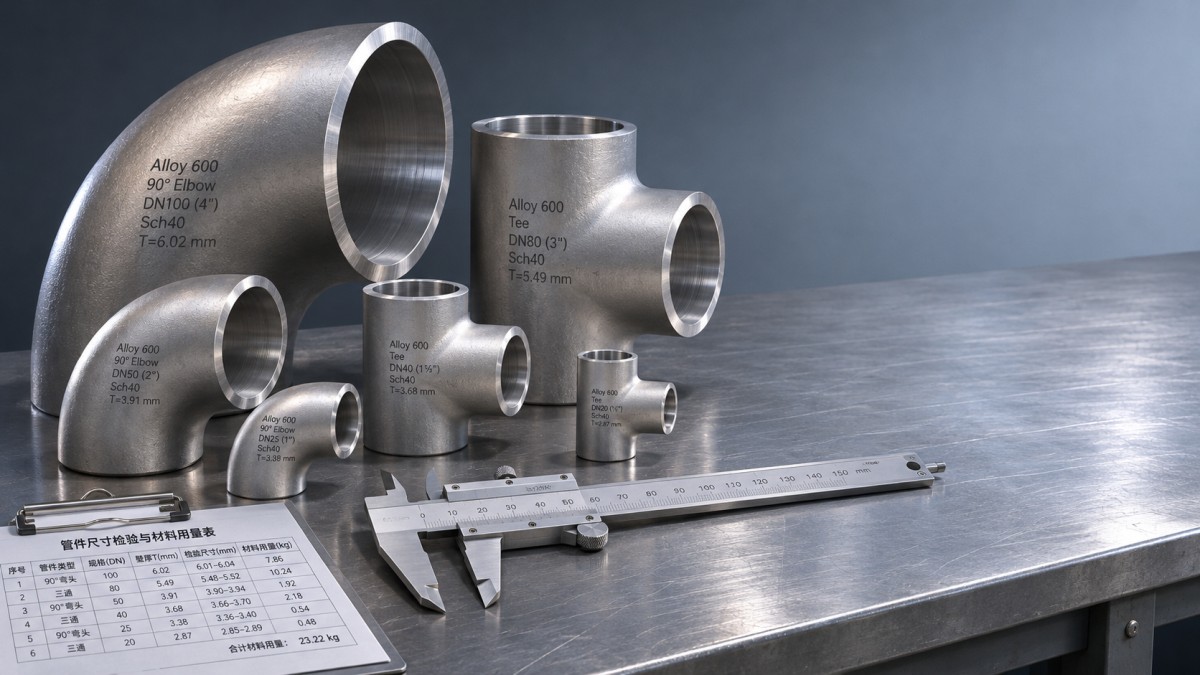
Material selection and the amount of material consumed often establish the largest share of cost. Complex manufacturing, stringent inspection, small quantities, and urgent delivery can significantly increase it.
The lowest unit price is not necessarily the lowest project cost. A useful comparison also accounts for certification, inspection, freight, delivery risk, and the consequences of component failure.
For example, a compact fitting made from an expensive nickel alloy may cost more than a larger stainless steel component because of raw material availability, machining difficulty, and documentation requirements.
Ask suppliers to separate material, manufacturing, testing, tooling, and logistics charges where practical. This breakdown makes differences between quotations easier to investigate and negotiate.
How Does Alloy Grade Affect Material Cost?
Alloy grades differ in composition, availability, and processing requirements. Nickel, cobalt, titanium, and other alloying elements can contribute substantially to raw material costs, depending on market conditions.
Corrosion-resistant nickel alloys may be justified in aggressive chemical service, while high-temperature alloys may be selected for strength or oxidation resistance at elevated operating temperatures.
However, a more expensive grade is not automatically better for every application. Selection should reflect the actual fluid, concentration, temperature, pressure, and expected service life.
Procurement teams should obtain the required grade and applicable material standard from engineering. Substituting a similar-sounding alloy without technical approval can introduce corrosion, strength, or compliance risks.
Prices can also change between quotation and purchase because of raw material markets. Check the quote validity period and ask whether alloy surcharges or price adjustments apply.
Availability matters as much as nominal material price. A common grade in a stocked size may be cheaper and faster to source than a less common grade requiring a mill order.
Why Do Size, Shape, and Tolerances Change the Price?
Outside diameter, wall thickness, fitting type, and end connections determine the starting material and production route. Larger or thicker components generally require more alloy and more processing.
Material yield is equally important. A complex fitting machined from solid stock can generate substantial scrap, so its purchased raw material weight may greatly exceed its finished weight.
Unusual bends, branch configurations, transitions, or connection details may require specialized tooling and additional operations. A standard geometry can often reduce both production time and cost.
Tight dimensional tolerances may increase machining time, inspection effort, and rejection risk. Specify critical tolerances where function demands them, while allowing reasonable tolerances on noncritical features.
Surface finish can have a similar effect. Requirements for sealing faces, internal cleanliness, or polished surfaces should be clearly defined rather than applied uniformly without a technical reason.
How Do Manufacturing Methods Influence Cost?
Depending on the design and applicable specification, a fitting may be formed, forged, machined, welded, or produced using a combination of processes.
Forming or forging may require tooling and minimum quantities but can be economical over repeated production. Machining may suit prototypes or complex shapes while consuming more material.
Welded construction can offer design flexibility, but weld preparation, qualified procedures, inspection, and any required post-weld treatment add cost. The permitted construction must be confirmed against project requirements.
Some alloys are difficult to form or machine and may require slower cutting speeds, specialized tools, or controlled heat treatment. These constraints affect labor, equipment time, and yield.
Discuss acceptable manufacturing routes with engineering before requesting prices. Suppliers can then propose feasible options without assuming that a cheaper process is permitted for the intended service.
How Much Do Testing and Traceability Add?
Inspection costs depend on the tests specified, the number of components or production lots covered, and whether an independent witness or third-party inspector is required.
Typical requirements may include dimensional inspection, chemical analysis, mechanical testing, pressure testing, or nondestructive examination. The applicable standard and acceptance criteria determine which tests are appropriate.
For welded fittings, radiographic, ultrasonic, liquid penetrant, or other examinations may be specified according to the design and service conditions. Each adds preparation, inspection, and documentation work.
Material traceability can require heat identification, marking, and certificates linking the finished fitting to its starting material. Confirm the required certificate type and records before ordering.
Testing should address actual safety and compliance risks. Unnecessary requirements increase cost, but removing specified inspection without engineering approval can create a much larger project risk.
When Are Surface Treatments Worth Considering?
Some assemblies also require localized wear protection on associated valve seats or sealing surfaces. In those cases, hardfacing material and application may be separate quotation items.
For example, Cobalt-Based Superalloy Powders (Stellite Series) includes grades used for wear-resistant hardfacing. Stellite 6 offers a balance of toughness and wear resistance.
Powder is not a pipe fitting, and its use is not automatically appropriate for one. Confirm the substrate, service conditions, coating process, and qualification requirements with engineering.
Where hardfacing is specified, compare the complete applied cost, including preparation, deposition, finishing, and inspection, against the expected benefit in service life or maintenance intervals.
How Do Order Volume and Delivery Dates Affect Pricing?
Small orders must absorb setup, programming, tooling, and documentation costs across fewer pieces. Increasing quantity can lower the unit price, although the saving depends on production capacity.
Ask for price breaks at realistic quantities and distinguish one-time tooling charges from recurring unit costs. Confirm who owns any dedicated tooling and whether storage charges apply.
Urgent delivery may require expedited material procurement, priority scheduling, overtime, or express freight. A short lead time can also limit the choice of qualified suppliers.
For recurring demand, a forecast or scheduled release agreement may improve planning. Before committing, clarify minimum quantities, cancellation terms, inventory responsibilities, and the period covered by pricing.
What Should Buyers Include in an RFQ?
A complete request for quotation reduces assumptions and makes supplier responses more comparable. Provide drawings and specifications with revision numbers, and identify any pending technical decisions.
- Fitting type, quantity, dimensions, wall thickness, connection details, tolerances, and required surface finish.
- Alloy grade, material specification, applicable design or product standard, and permitted manufacturing method.
- Operating fluid, design temperature and pressure, corrosion concerns, and any special service requirements.
- Required tests, inspection coverage, acceptance criteria, certificates, traceability, and third-party involvement.
- Delivery location, required date, packaging, commercial terms, and any requested price breakdown.
Ask suppliers to list deviations and exclusions explicitly. A quotation that omits required testing or certification may appear cheaper while leaving an expensive gap in scope.
How Should You Compare Supplier Quotes?
First, check technical compliance line by line: grade, dimensions, manufacturing route, inspection, and documentation. Resolve exceptions with engineering before ranking prices.
Next, compare the total delivered cost using consistent quantities and commercial terms. Include tooling, inspection, freight, duties where applicable, and any separately priced documentation.
Finally, assess delivery commitments and supplier capability. Ask about relevant manufacturing experience, quality controls, material sourcing, and how changes or nonconformities will be handled.
Shandong Titanium Nickel Special Steel Co., Ltd. works with nickel-based, iron-based, titanium, and other special alloys. Confirm the required fitting specification and available manufacturing capabilities when requesting a quotation.
Conclusion
Custom alloy fitting costs reflect both the alloy purchased and the work needed to turn it into a compliant component. Material yield, complexity, testing, quantity, and timing all matter.
A precise RFQ and a like-for-like comparison help procurement teams identify avoidable cost without compromising service requirements. The best choice is the fitting that meets the specification reliably at an acceptable total cost.
