


News
- ▶ How to prevent coil damage during delivery from a Monel 400 supplier
- ▶ How to compare freight costs from a monel 400 Coil supplier
- ▶ How coil edge quality affects stamping with Monel 400
- ▶ How to confirm temper requirements with a monel 400 Coil supplier
- ▶ When dual sourcing from an Inconel 625 Supplier reduces risk
Message
Nickel Alloy Machining, Welding And Fabrication Guide
Introduction: Nickel alloy machining, welding, and fabrication require disciplined process control because incorrect heat input, tooling, or contamination can quickly compromise corrosion resistance and long-term component reliability.
For manufacturers and project buyers, the central question is not whether nickel alloys can handle severe service, but whether the selected processing method preserves their designed material properties.
INCONEL, INCOLOY, Hastelloy, Monel, and nickel-based heat-resistant alloys are often chosen for aggressive chemical, marine, energy, aerospace, and high-temperature operating environments.
However, these materials are more demanding than ordinary stainless steels. Work hardening, low thermal conductivity, weld sensitivity, and strict cleanliness requirements must be managed from raw material through inspection.
What Should Be Decided Before Nickel Alloy Fabrication?
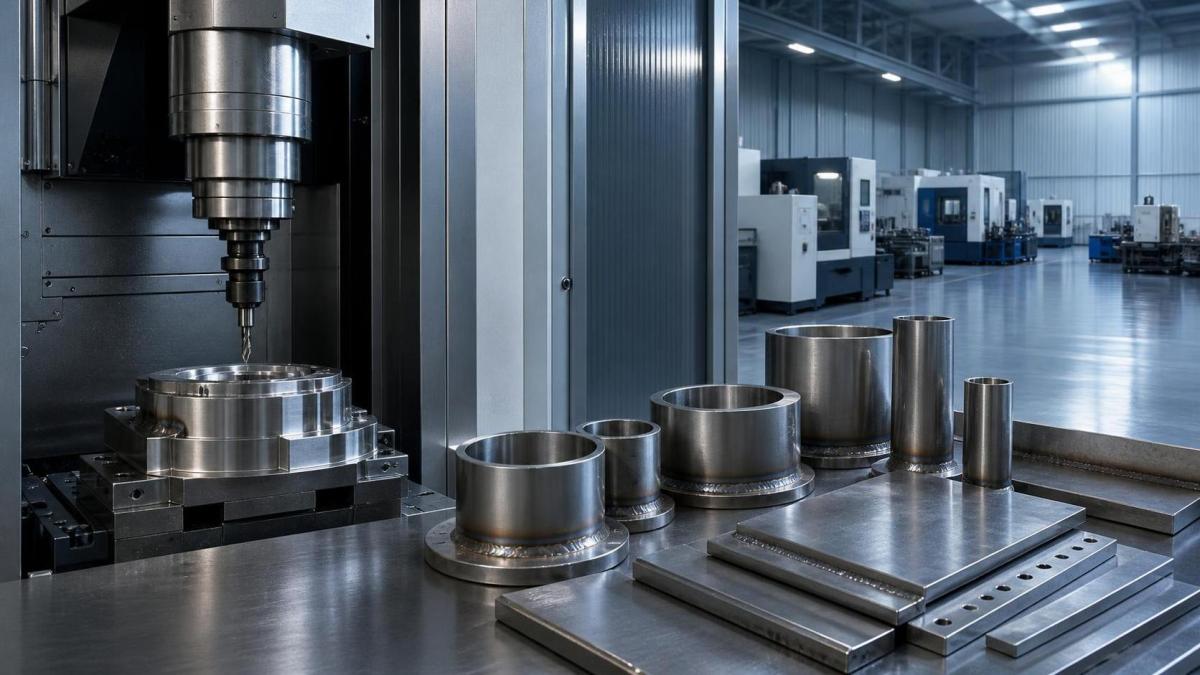
Before machining or welding begins, engineers should define the actual service medium, operating temperature, pressure cycle, corrosion mechanism, required lifetime, and applicable dimensional tolerances for the component.
This early assessment determines whether the project needs a corrosion-resistant alloy, a high-temperature nickel alloy, a precipitation-hardened grade, or a specialized iron-nickel precision alloy.
Material selection should not depend only on a datasheet. Chlorides, reducing acids, oxidizing acids, sulfur-bearing gases, thermal cycling, and crevice conditions can produce very different alloy performance.
For example, Hastelloy C276 is widely selected for severe mixed-acid and chloride-containing conditions, while Monel 400 performs strongly in selected marine and hydrofluoric acid environments.
Inconel 625 offers excellent corrosion resistance and high-temperature strength, whereas Inconel 718 is frequently specified when high mechanical strength and controlled heat treatment are essential.
Buyers should also establish the required product form early. Plate, sheet, bar, pipe, tube, wire, forgings, and fabricated assemblies each involve different forming limits and inspection priorities.
A reliable supplier should confirm melt route, chemical composition, mechanical properties, traceability, heat treatment condition, and relevant testing requirements before production schedules are committed.
How to Machine Nickel Alloys Without Excessive Tool Wear
Nickel alloy machining is challenging because these alloys retain strength at elevated temperatures and tend to work harden rapidly when cutting tools rub instead of cutting efficiently.
The primary machining objective is maintaining a consistent chip load. Light or interrupted cuts can harden the surface and increase tool wear during subsequent machining passes.
Rigid machine setups are essential. Toolholders, fixtures, workholding, and spindle condition should minimize vibration because chatter damages surface finish and accelerates cutting-edge failure.
Use sharp, high-quality carbide tooling designed for nickel alloys. Tool geometry should promote positive cutting action, reliable chip evacuation, and controlled heat transfer away from the cutting edge.
Cutting parameters should be conservative but productive. Extremely slow feeds often create rubbing, while excessive cutting speed generates heat that shortens tool life and affects part integrity.
High-pressure coolant can improve chip control and reduce thermal loading. The coolant stream should reach the cutting zone directly rather than simply flooding the exterior of the part.
For drilling, avoid dwelling at the hole bottom. Peck cycles should remove chips efficiently, while tool alignment and coolant delivery must prevent localized overheating or drill breakage.
Threading and tapping require particular attention. Form taps can create excessive stresses in some nickel alloys, so process trials should verify torque, thread quality, lubrication, and tool durability.
Final machining allowances should account for distortion from later welding, heat treatment, or stress relief. Critical sealing surfaces are often best finished after major thermal operations are complete.
Which Welding Practices Protect Nickel Alloy Performance?
Nickel alloy welding succeeds when the procedure controls contamination, heat input, filler compatibility, shielding quality, and residual stress. These factors directly affect corrosion resistance and weld integrity.
Gas tungsten arc welding is widely used for thin sections and precision assemblies because it offers excellent puddle control and clean weld profiles when performed by qualified welders.
Gas metal arc welding and submerged arc welding may be suitable for thicker sections or higher deposition requirements, provided parameters are validated for the alloy grade and joint design.
Joint surfaces must be thoroughly cleaned before welding. Oil, paint, moisture, sulfur-containing compounds, shop dirt, and embedded iron particles can cause porosity, cracking, or localized corrosion.
Dedicated stainless steel or nickel alloy brushes should be used. Carbon steel grinding tools and contaminated handling equipment can transfer iron particles that later develop rust staining or corrosion sites.
Filler metal selection should match the intended corrosion and temperature performance, not merely the nominal base-metal grade. In some cases, a more corrosion-resistant filler is deliberately specified.
Low to moderate heat input generally helps limit excessive grain growth and distortion. Interpass temperature must be monitored because overheating can affect microstructure and service performance.
Back purging is critical for many pipe, tube, and thin-gauge applications. An inert gas purge protects the root side from oxidation and helps maintain a smooth, corrosion-resistant internal surface.
Weld procedure qualification should include the actual base material condition, thickness range, filler, position, shielding gas, and post-weld treatment expected during serial production.
How Forming and Fabrication Affect Dimensional Stability
Nickel alloy fabrication includes cutting, bending, rolling, stamping, forming, drilling, assembly, and finishing. Each process must consider the alloy’s strength, ductility, springback, and work-hardening behavior.
Cold forming may be practical for many corrosion-resistant nickel alloys, but tight radii and high deformation can require intermediate annealing to restore ductility and reduce cracking risk.
Springback is often greater than expected when fabricating high-strength grades. Tooling and forming calculations should therefore include trial validation rather than relying only on carbon steel experience.
Thermal cutting methods can be used where appropriate, but heat-affected edges may need machining or grinding before critical welding. This removes oxide scale and potentially altered surface material.
Fabricated heat-transfer equipment requires especially careful forming control because plate flatness, fin geometry, joint alignment, and surface condition directly influence thermal efficiency and pressure performance.
For severe-service exchanger assemblies, a heat exchanger fin plate made from Inconel, Incoloy, Monel, or Hastelloy can increase heat-transfer area while maintaining structural stability.
Corrugated fin designs may improve heat transfer further, but they also increase fabrication complexity. Consistent corrugation geometry, weld accessibility, and clean flow passages should be verified during design review.
Fabricators should define acceptable distortion limits before work begins. Straightening after welding or forming must be controlled carefully to avoid excessive localized cold work or surface damage.
What Quality Controls Matter Most for Critical Components?
Dimensional inspection alone is insufficient for nickel alloy components used in corrosive or high-temperature service. Material verification, weld examination, surface condition, and documentation are equally important.
Positive material identification helps confirm that the correct alloy has been issued to production. This is especially valuable where visually similar nickel alloys are stored or processed together.
Non-destructive testing may include visual inspection, liquid penetrant testing, radiographic testing, ultrasonic testing, or helium leak testing, depending on component geometry and service requirements.
Liquid penetrant testing is commonly used to identify surface-breaking weld defects. Radiography can reveal internal discontinuities, while ultrasonic testing is useful for selected thicker sections and forgings.
Pressure testing should reflect the governing code and equipment duty. Hydrostatic, pneumatic, or leak testing methods must be selected with appropriate safety controls and acceptance criteria.
Surface finish can influence corrosion behavior. Rough surfaces, weld spatter, crevices, embedded contaminants, and incomplete cleaning may create initiation points for localized corrosion in aggressive media.
Post-fabrication cleaning may include degreasing, mechanical cleaning, pickling, passivation, or controlled chemical treatment. The selected method must be compatible with the alloy and customer specification.
Complete traceability should link finished parts to material certificates, welding records, inspection reports, heat treatment data, and dimensional results. This documentation reduces project risk and supports future maintenance decisions.
How to Choose a Nickel Alloy Processing Partner
The best processing partner combines alloy knowledge with practical manufacturing capability. A low initial quotation has limited value if machining delays, weld repairs, or premature field failures follow.
Ask whether the supplier has experience with the exact alloy grade, product form, thickness, and operating condition. General stainless steel fabrication capability does not automatically transfer to nickel alloys.
Review available equipment, welding qualifications, inspection resources, and material controls. The supplier should explain how it prevents alloy mix-ups, contamination, distortion, and nonconforming repairs.
For custom components, involve the fabricator during design development. Early input can simplify joint geometry, improve machinability, reduce waste, and lower the total cost of ownership.
Shandong Titanium Nickel Special Steel Co., Ltd. supports a broad range of nickel-based, iron-based, titanium, zirconium, copper-nickel, cobalt-based, and corrosion-resistant special alloy material requirements.
Conclusion
Successful nickel alloy machining, welding, and fabrication depend on selecting the correct alloy and then protecting its properties through every production stage, from cutting and forming to inspection.
Projects should prioritize process qualification, contamination control, appropriate tooling, welding discipline, and documented quality assurance. These measures protect performance where corrosion, heat, pressure, and reliability are critical.
When evaluating a nickel alloy component, focus on the full manufacturing route rather than material grade alone. Proper processing is what turns advanced alloy chemistry into dependable service life.
