


News
- ▶ What alloy rod straightness tolerance is needed for CNC machining
- ▶ When alloy rod is suitable for corrosion-resistant valve components
- ▶ How alloy rod chemistry influences weld repair performance
- ▶ Can alloy wire retain spring force after prolonged heat exposure
- ▶ How to assess surface finish requirements for alloy wire orders
Message
Can alloy wire retain spring force after prolonged heat exposure
Can Alloy Wire retain reliable spring force after prolonged heat exposure? For business evaluators, the answer depends on alloy composition, operating temperature, stress level, and heat-treatment quality.
High-performance nickel-based, iron-based, and precision alloy wires can resist relaxation, creep, and oxidation, but no material retains identical force under every temperature and load condition.
The commercial question is therefore not simply whether a wire survives heat. It is whether the finished spring maintains sufficient working force throughout its required service life.
For procurement teams, technical buyers, and project evaluators, spring-force retention affects maintenance frequency, warranty exposure, equipment safety, and the total cost of ownership.
A suitable Alloy Wire must be selected against actual operating conditions, including peak temperature, continuous temperature, cyclic loading, atmosphere, corrosion risk, and dimensional tolerances.
What Happens to Spring Force at Elevated Temperature?
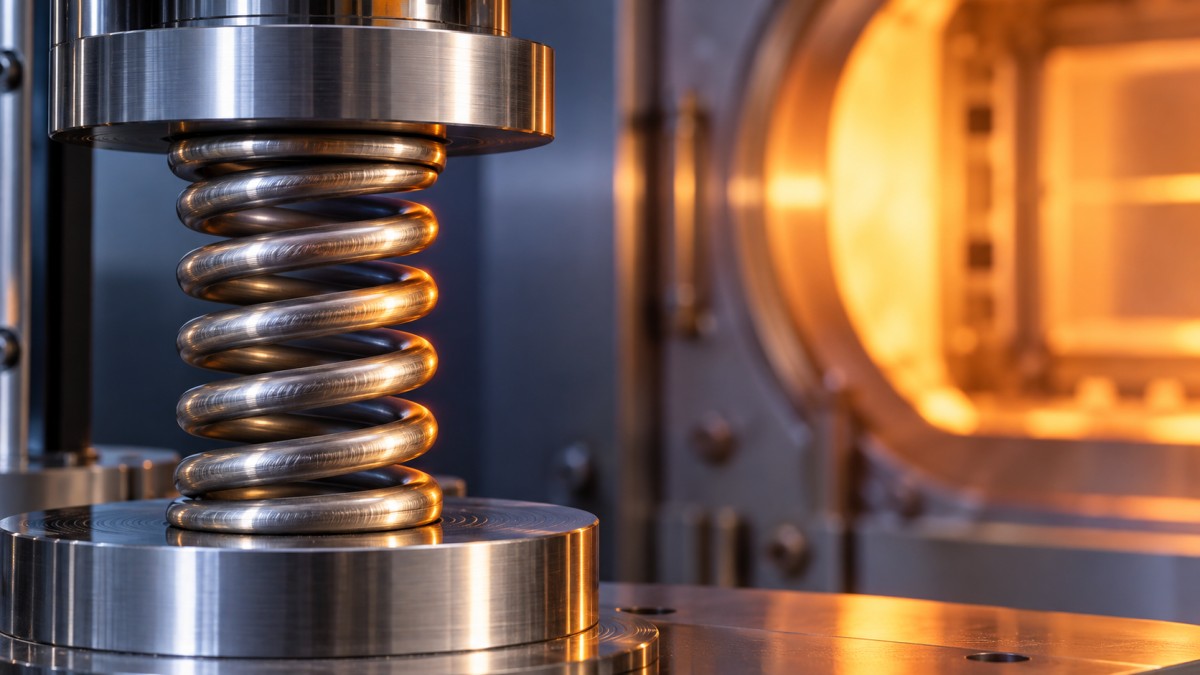
A spring stores energy through elastic deformation. When temperature rises, the material may gradually lose part of that stored energy through stress relaxation or creep.
Stress relaxation occurs when a spring is held at a fixed deflection and its load decreases over time. Creep occurs when sustained stress causes permanent deformation.
Both mechanisms reduce functional force, but their commercial impact differs. A slight force reduction may be acceptable in a latch, while it can be critical in valves.
Heat also changes the wire's microstructure. Grain growth, precipitation changes, oxidation, and phase instability can lower strength, alter hardness, or create brittle surface conditions.
Standard carbon steel wire often loses spring performance quickly at elevated temperature. Stainless grades may improve corrosion resistance, yet remain insufficient for severe thermal loading.
Nickel-based and specialized iron-based Alloy Wire grades are designed to maintain useful mechanical properties where conventional spring materials experience unacceptable relaxation or permanent set.
However, “high-temperature resistant” is not a complete purchasing specification. Evaluators should request retention data at the intended temperature, stress level, exposure duration, and atmosphere.
Which Variables Determine Long-Term Retention?
Operating temperature is the first screening factor. As temperature approaches a material's practical service limit, relaxation and creep accelerate, often at a nonlinear rate.
Continuous exposure deserves more attention than occasional temperature spikes. A wire that tolerates short excursions may not retain spring force after thousands of operating hours.
Applied stress is equally important. Springs designed too close to their high-temperature strength limit can relax rapidly even when the nominal temperature seems acceptable.
Geometry influences real performance as well. Wire diameter, coil diameter, number of active turns, pitch, and preload determine the stress distribution within the spring.
Surface quality also matters. Scratches, decarburization, scale, inclusions, and poor drawing quality can initiate cracks or locally accelerate oxidation under cyclic thermal conditions.
The service atmosphere must be defined clearly. Air, steam, sulfur-bearing gases, chlorides, reducing environments, and process chemicals can require very different alloy selections.
Finally, manufacturing controls influence the outcome. Cold work, solution treatment, aging, stress relief, and coiling sequence can substantially change a spring's retained force.
How Should Buyers Compare Alloy Families?
Nickel-based alloys are commonly considered for demanding thermal service because nickel supports high-temperature strength, oxidation resistance, and stability in many corrosive environments.
Inconel-type materials can be suitable where oxidation resistance and elevated-temperature strength are priorities. Certain precipitation-strengthened grades offer stronger retention under sustained mechanical stress.
Nimonic-type alloys are often evaluated for hot springs in aerospace, turbine-adjacent equipment, and high-temperature industrial assemblies because they are designed for creep resistance.
Iron-nickel precision alloys may be more appropriate when controlled elastic behavior, stable modulus, or low thermal expansion matters more than maximum temperature capability.
Hastelloy-type alloys are valuable where heat exposure occurs alongside aggressive chemical media. Their corrosion resistance can prevent surface degradation that would otherwise shorten spring life.
Monel alloys can perform well in selected marine and chemical environments, but buyers should avoid assuming they offer the same high-temperature spring retention as specialized superalloys.
Material selection should compare the actual grade, condition, and wire form. A brand family name alone does not confirm equivalent mechanical behavior or heat-treatment response.
For projects requiring coordinated material supply, Nickel base alloy rod can also support related shafts, fasteners, valve stems, and high-strength components within the same system.
What Evidence Should Business Evaluators Request?
Start with a clear duty profile. Document continuous and peak temperature, target service life, loading mode, required spring force, allowable loss, and exposure environment.
Then request material certification showing chemical composition, heat number, mechanical properties, dimensional tolerances, and applicable standards for the proposed Alloy Wire supply.
For critical applications, ask for stress-relaxation or creep test data rather than relying only on room-temperature tensile strength. These tests should match realistic conditions.
A useful test report states temperature, initial stress, exposure time, specimen condition, atmosphere, and percentage load loss. Without these details, comparisons can be misleading.
Review the processing route as carefully as the alloy chemistry. The supplier should identify whether the wire is annealed, cold-drawn, solution-treated, aged, or stress-relieved.
Buyers should also confirm that laboratory data represents the supplied wire diameter. Fine wire and heavy wire can respond differently to thermal processing and surface oxidation.
Where failure consequences are high, validate prototypes in the actual assembly. Force measurements before and after thermal cycling provide more meaningful evidence than datasheet assumptions.
How Can Projects Reduce Relaxation Risk?
Selecting a stronger alloy helps, but spring design remains essential. Lowering the working stress can significantly improve retention, especially during continuous high-temperature operation.
Increasing the number of active coils, adjusting wire diameter, or revising preload may reduce stress. These changes must be balanced against space, force, and fatigue requirements.
Specify a realistic operating range instead of a single maximum temperature. This allows suppliers to recommend material with an adequate engineering margin rather than minimal compliance.
Protective environments can extend life. Shields, coatings, controlled atmospheres, and corrosion-resistant alloy choices may prevent surface damage that leads to force loss or fracture.
Thermal cycling should be assessed separately from steady exposure. Repeated heating and cooling can create fatigue damage, differential expansion, and altered preload conditions.
Installation conditions also deserve review. Springs may be unintentionally over-compressed during assembly, causing high initial stress and reducing their available relaxation margin.
For long-life equipment, define an inspection strategy. Periodic force testing or functional checks can identify performance drift before it affects safety, sealing, actuation, or product quality.
When Is a Higher-Cost Alloy Justified?
Nickel-based Alloy Wire generally costs more than common spring steel because of alloying elements, controlled melting, specialized processing, and tighter quality requirements.
That premium is justified when replacement requires shutdowns, access is difficult, product failure creates safety risk, or force loss causes expensive process interruptions.
It may be unnecessary where exposure is brief, temperatures are moderate, spring force is noncritical, and maintenance intervals already permit economical replacement.
Evaluators should calculate lifecycle cost, not only purchase price. Include qualification work, assembly labor, replacement parts, downtime, field failures, and potential customer claims.
A lower-priced wire that relaxes early can create a larger financial loss than a premium alloy. Conversely, overspecifying an aerospace-grade alloy can waste budget.
The best decision aligns material capability with measurable functional requirements. A technically impressive alloy is only commercially valuable when it solves a defined operating risk.
Conclusion: Specify Retention, Not Just Heat Resistance
Alloy Wire can retain spring force after prolonged heat exposure, but performance depends on the specific alloy grade, spring design, processing condition, stress, temperature, and environment.
Business evaluators should avoid broad claims such as “heat resistant” and instead define acceptable force loss over a stated time, temperature, and loading condition.
Nickel-based, iron-based, and precision alloys provide practical solutions for demanding service, particularly when supported by appropriate heat treatment, validation testing, and supplier documentation.
Ultimately, the right purchase decision comes from comparing retained-force evidence, lifecycle cost, and application risk. That approach turns material selection into a defensible business decision.
