


News
- ▶ What Is 2J32 Alloy Bar? Properties and Potential Uses
- ▶ GH39 Alloy Bar: Verifying Grade, Condition and Traceability
- ▶ HAYNES 282 Bar for High-Temperature Parts: Key Design Factors
- ▶ 3J58 Alloy Pipe: What to Check Before Specifying a Tube
- ▶ Verifying Monel 400 Compliance: PMI, Certificates and Traceability
Message
What Is 2J32 Alloy Bar? Properties and Potential Uses
What Is 2J32 Alloy Bar? Properties and Potential Uses
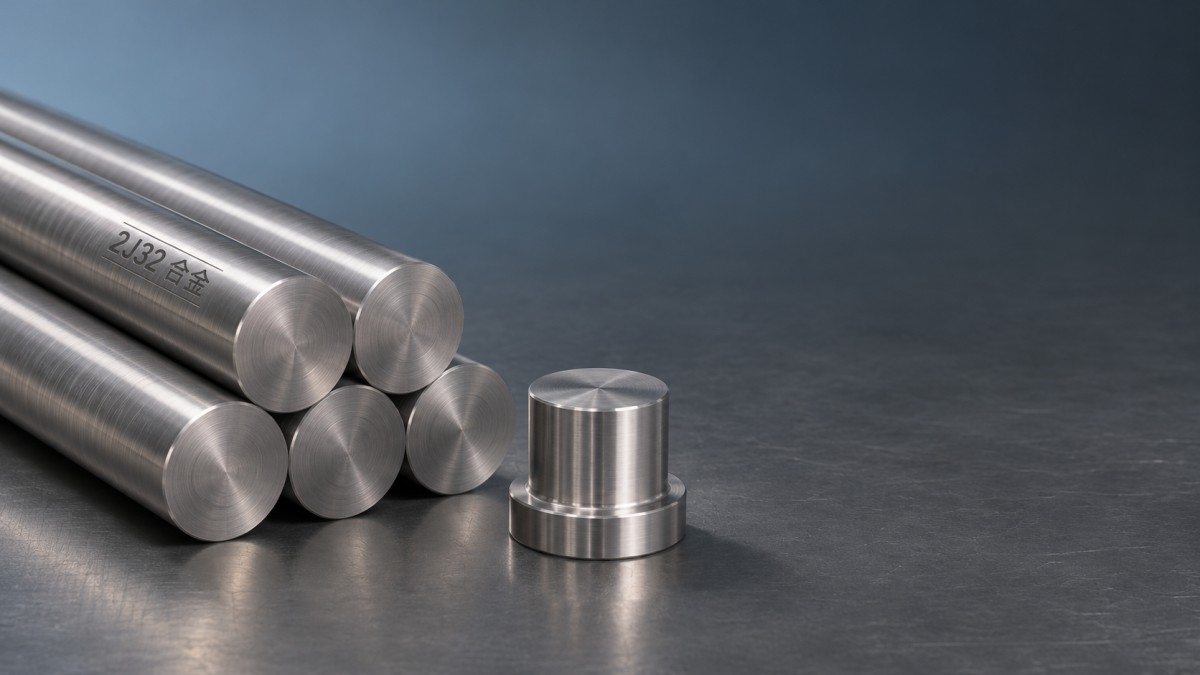
What is a 2J32 steel bar, and what makes it suitable for specialized applications? As a precision alloy product, 2J32 may be considered where controlled material properties are important. Understanding its composition, magnetic behavior, and processing characteristics can help researchers and engineers assess its suitability for a particular design. This guide explores the key properties and potential uses of 2J32 alloy bar, along with practical factors to consider when evaluating the material.
The term “bar” describes the supplied shape, not a separate alloy. A bar can serve as starting stock for a machined component, but its usefulness depends on more than its diameter and nominal grade. For precision magnetic applications, the material condition, processing history and final geometry can be just as important as the designation on the purchase order.
Understanding the Material Behind the Grade
2J32 is associated with the precision magnetic alloy family. Unlike ordinary structural steel, a precision magnetic alloy is selected primarily for how it responds to an applied magnetic field, rather than for strength alone. That distinction matters when a component must behave predictably during magnetization, demagnetization or repeated operation.
The designation by itself is not enough to establish an exact chemical analysis or guarantee a particular magnetic performance. Researchers should check the applicable grade specification and the material certificate for the supplied heat. When comparing documents from different sources, confirm that they refer to the same product form and material condition; a value measured on processed strip, for example, should not automatically be applied to a machined bar component.
This is also why a claimed equivalent grade deserves scrutiny. Two alloys can look similar on a composition list yet differ in magnetic response after processing. Equivalence should be assessed against the property that the part actually needs, not just a similar name or base-metal content.
Which Properties Matter in Practice?
Magnetic behavior is best understood through a set of related measurements. Depending on the design, an engineer may need to examine coercivity, remanence, magnetic induction and the shape of the hysteresis loop. These describe, respectively, the field associated with reducing magnetization, the magnetization retained after an applied field is removed, the material’s magnetic response, and its behavior through a magnetization cycle.
A single number rarely tells the whole story. Test-field strength, specimen geometry, heat treatment and the method used to measure the property can all affect the result. Ask whether reported values are minimum requirements, typical results or measurements from the actual supplied batch. Those categories are not interchangeable.
Mechanical and environmental properties matter too. A magnetic part may still need to withstand assembly loads, maintain tolerances and operate in a specific atmosphere. Do not assume that a precision alloy offers the corrosion resistance of a stainless steel or the strength of a structural alloy without checking the relevant data. If the component will see elevated temperatures, its magnetic and dimensional behavior at operating temperature should be evaluated separately from room-temperature results.
Potential Uses Depend on the Required Magnetic Response
A 2J32 alloy bar may be considered as starting material for magnetic components in instruments, sensors or electromagnetic assemblies where a controlled magnetic response is required. Bar stock is especially relevant when the intended part is turned, drilled or otherwise machined from solid material. These are potential areas of investigation, not blanket approvals for the grade.
Consider a small machined magnetic element: its function may depend not only on the alloy but also on the length of its magnetic path, any air gap and the field produced by the surrounding assembly. A material test can narrow the options, but a representative finished-part test is often more useful for deciding whether the design works.
Nor is every precision alloy intended to solve the same problem. Invar is generally considered for low thermal expansion, while Mu-metal is associated with high magnetic permeability and shielding. Shandong Titanium Nickel Special Steel Co., Ltd. supplies special alloys in different forms, including Precision Alloy Tubes in materials such as Invar and Mu-metal. Tubing may suit a hollow component or shield, but neither the tubular form nor those alloy names should be treated as evidence that they are substitutes for 2J32 bar.
Processing Can Change the Result
Machining is not merely a dimensional operation for a magnetic component. Cutting and deformation can introduce residual stress, and subsequent heat treatment may alter the material’s magnetic response. The appropriate sequence depends on the alloy specification and the component design; a treatment suitable for one precision alloy should not be copied to another without verification.
A practical discussion should cover the supplied condition, expected machining allowance and whether final heat treatment is required. If magnetic properties are critical, agree on the test condition: as supplied, after heat treatment, or on a finished representative part. Also clarify who performs each operation and how the material will be protected from contamination or distortion during processing.
Welding deserves the same caution. Local heating can change microstructure and properties around a joint, so weldability should be assessed for the specific assembly rather than inferred from the word “steel.” Where a uniform magnetic path is essential, a mechanically assembled or single-piece design may be worth evaluating alongside a welded one.
What to Confirm Before Specifying 2J32 Steel Bar
Start with the component’s function and work backward to the bar specification. A useful inquiry identifies the required dimensions and tolerances, the applicable grade standard, the supplied condition and the magnetic properties that must be demonstrated. Include the intended operating temperature and any corrosion or cleanliness concerns that could affect material selection.
For traceability, request a heat-specific material certificate and agree on any additional inspection before production. If a supplier proposes an alternative grade or form, compare the relevant test conditions and processing requirements as well as chemistry. A small qualification sample or representative component can help establish whether the finished material meets the design objective before a larger quantity is committed.
