


News
- ▶ Nickel and Molybdenum Prices: Their Impact on Inconel 625 Costs
- ▶ Inconel 625 vs 316L: Comparing Material and Lifecycle Costs
- ▶ What Determines Inconel 625 Price per Kilogram or Pound?
- ▶ Monel 400 vs K-500: Comparing Strength and Corrosion Resistance
- ▶ Is Monel 400 Suitable for Seawater Piping? Key Design Limits
Message
What Determines Inconel 625 Price per Kilogram or Pound?
What Determines Inconel 625 Price per Kilogram or Pound?
Inconel 625 price can vary significantly per kilogram or pound, making supplier quotations difficult to compare on cost alone. Nickel and molybdenum prices, product form, order volume, quality requirements, and delivery terms all influence the final figure. For a meaningful comparison, buyers need to know not only what the material costs, but also what is included in the price and whether the quoted material meets the same requirements.
There is no single reliable market price for every form of Inconel 625. A small quantity of certified seamless tube cut to length is a different purchase from a larger order of standard-size plate. Asking suppliers for a price without defining those details may produce numbers that look comparable but are not.
Raw materials set the direction, not the final price
Alloy 625 is a nickel-based alloy containing significant amounts of chromium and molybdenum. Changes in the cost of these inputs can affect new mill pricing, particularly when suppliers use material surcharges or review quotations over short periods. Nickel is an obvious indicator to watch, but it is not a complete pricing formula: melting, conversion, inventory, energy, and supplier margins also contribute.
A change in the nickel market will not necessarily appear immediately in a stockholder’s quote. Existing inventory may have been purchased under different conditions, while a mill order reflects its own pricing date and production schedule. Ask whether the quotation is fixed, how long it remains valid, and whether an alloy surcharge can change before shipment. For longer projects, clarify the reference date and adjustment method in the purchase agreement rather than assuming both parties interpret “market price” the same way.
Product form and dimensions can outweigh a small unit-price difference
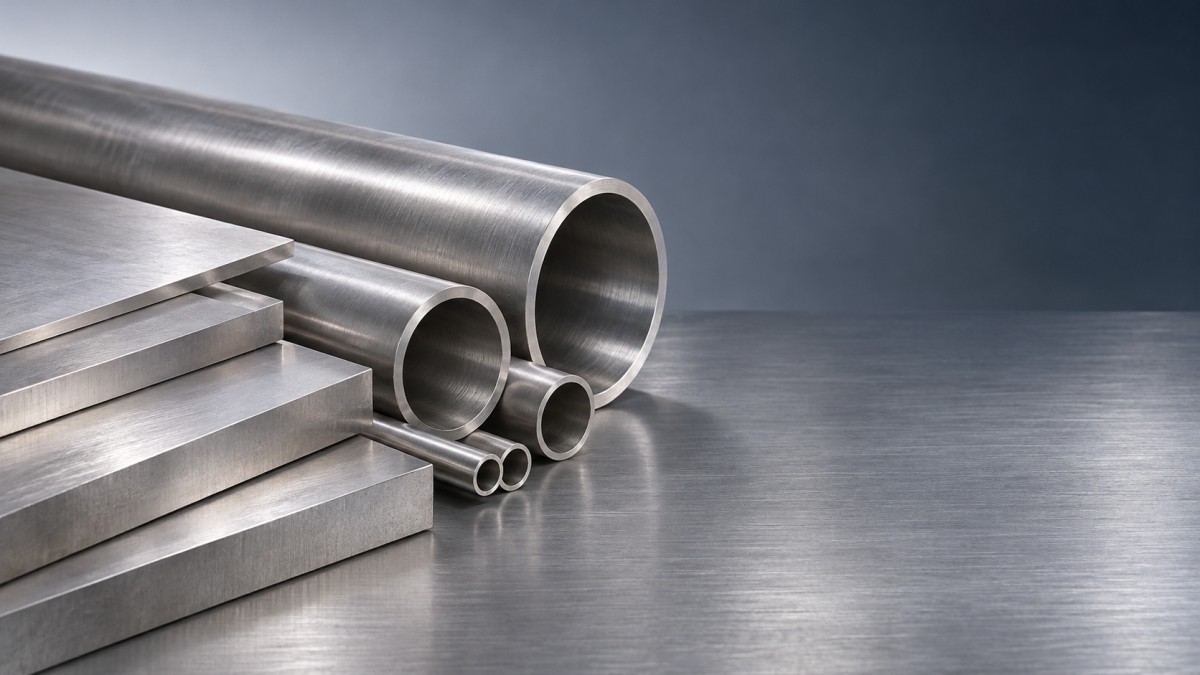
Plate, sheet, bar, pipe, tube, and welding consumables do not pass through identical manufacturing routes. Seamless tube, for example, involves different production and inspection requirements from flat-rolled plate. Tight tolerances, unusual wall thicknesses, special finishes, or nonstandard lengths can further restrict the available supply.
A lower price per kilogram is not automatically the lowest fabrication cost. A plate that requires extensive trimming, or a bar supplied with excessive machining allowance, may leave the buyer paying for material that never reaches the finished component. Compare quoted weight with the usable quantity required by the drawing, and establish whether the supplier charges on theoretical weight, actual shipped weight, or another agreed basis.
Where a project permits it, ask for alternatives in standard stock sizes and calculate the cutting yield before accepting or rejecting them. Consolidating compatible dimensions can sometimes reduce handling and minimum-order costs. It should not, however, replace an engineering review of the finished part’s tolerances and material condition.
Convert prices before comparing them
One kilogram equals approximately 2.20462 pounds. To convert a price per kilogram to a price per pound, divide it by 2.20462. To convert a price per pound to a price per kilogram, multiply it by 2.20462. Make the currency conversion separately, using the same exchange-rate date for each quote.
For illustration, a quote of $44.09/kg is approximately $20.00/lb; this is an arithmetic example, not a current market quotation. The calculation only compares the stated unit prices. It does not account for freight, taxes, inspection, minimum charges, or differences in the quantity supplied.
Specifications and documentation are part of the purchase
Use the required product specification and grade designation in the inquiry, not just the name “625.” UNS N06625 identifies the alloy, but the applicable product standard, material condition, dimensions, and testing requirements must still match the intended application. For example, a specification appropriate to plate is not automatically appropriate to seamless pipe or tube. Confirm the applicable edition and any project-specific requirements with engineering or the end user.
Material test documentation, heat traceability, additional mechanical tests, nondestructive examination, and independent inspection can all affect price and lead time. If one offer includes these items and another excludes them, the lower figure may become more expensive after the missing requirements are added. Request a clear list of included tests and documents, and verify that identification can be maintained through cutting or other processing where traceability is required.
Avoid adding requirements solely because they appeared on an unrelated purchase order. Extra testing may be justified for a critical component, but it should address a defined project need. Equally, removing a specified requirement to reduce the quote is a technical change, not just a commercial negotiation.
Order quantity, availability, and delivery terms
A small order can carry a higher unit price because cutting, administration, testing, and handling costs are spread across fewer kilograms. Larger quantities may offer better economics, but only if the size and specification can be sourced efficiently. An uncommon dimension or a requirement for a single heat may still trigger a production minimum or longer lead time.
Stock availability has a value when a shutdown or fabrication schedule is at risk. A mill-produced order may be attractive on unit price but unsuitable if its delivery date leaves no allowance for inspection and downstream processing. Ask whether the quoted material is physically in stock, when it can be dispatched, and whether the lead time is firm or an estimate.
Delivery terms also change the comparison. Identify the agreed Incoterms rule and named place, then determine which party pays freight, insurance, import clearance, duties, and local delivery. Payment terms, packaging, and exchange-rate exposure belong in the same calculation. A practical comparison is the landed cost divided by the usable quantity, with inspection and processing added where they are not already included.
Consider the whole component, not only the alloy purchase
In some valve and pump applications, the base material and the wear surface address different problems. Alloy 625 may be specified for corrosion resistance, while a separate hardfacing material is considered for localized wear. Shandong Titanium Nickel Special Steel Co., Ltd. supplies a range of special alloys, including nickel-based materials and Cobalt-Based Superalloy Powders (Stellite Series). Within that range, Stellite 6 is associated with a balance of toughness and wear resistance, while Stellite 12 is intended for greater abrasion resistance.
These powders are not direct substitutes for bulk Inconel 625. A hardfacing decision requires review of the service environment, substrate compatibility, deposition procedure, dilution, and inspection requirements. It may nevertheless be worth evaluating when the expensive damage is concentrated on a sealing or wear surface rather than throughout the component.
What to put in the request for quotation
Send each supplier the same grade, product standard, condition, dimensions, tolerances, quantity, required documentation, delivery location, and needed date. Ask for the unit price, chargeable weight, included processing, validity period, and any surcharge or minimum-order charge to be shown separately. If alternatives are acceptable, request them as separate offers rather than allowing an unapproved substitution in the base quote.
The strongest comparison is one that procurement and engineering can both check: same technical scope, same cost basis, and a delivery schedule that supports the project. Where a quote remains materially cheaper than the rest, clarify what has been excluded before treating the difference as a saving.
