


News
Message
JIS NW4400 Plate: Grade Identification and Order Checks
JIS NW4400 Plate: Grade Identification and Order Checks
Buying JIS NW4400 steel plate requires more than matching a grade name on a quotation. Procurement teams need to verify the applicable specification, material designation, dimensions, test documentation, and delivery requirements before placing an order. Because NW4400 is a nickel-copper alloy rather than conventional carbon steel, accurate identification is essential for avoiding substitution and ensuring the material meets project needs. This guide outlines the key grade identification and order checks to discuss with your supplier.
Start with the designation, not the trade name
NW4400 is associated with the nickel-copper alloy family commonly known as Alloy 400. A quotation may also refer to UNS N04400 or Monel 400. These references are useful starting points, but a familiar name alone does not establish compliance with a particular purchase specification.
Ask the supplier to identify the exact JIS standard, edition, product form and grade proposed. Check those details against the project specification and the applicable standard before accepting a cross-reference. If an ASTM specification is offered instead, treat it as a proposed alternative, not an automatic equivalent: chemical limits, permitted condition, dimensional tolerances and testing requirements must all be reviewed. Any substitution should be approved by the responsible engineering authority before the order is placed.
This distinction matters even when the intended service is familiar. Nickel-copper alloys can be considered for marine and chemical-processing equipment, but suitability depends on the actual medium, temperature, flow conditions and potential corrosion mechanisms. A grade match on paper is not a substitute for a service assessment.
Define the plate before comparing prices
A meaningful request for quotation should state thickness, width, length and quantity, along with the required tolerances. Specify whether the dimensions are finished sizes or whether machining and cutting allowances are needed. Also identify the required delivery condition, such as annealed, where applicable, and any project-specific requirements for flatness, surface finish or edge condition.
Plate and sheet terminology can differ between standards and suppliers. Rather than relying on the word “plate,” confirm that the quoted product form and thickness fall within the scope of the specification being supplied. If pieces will be cut from larger stock, ask whether the quoted price includes cutting, identification of each piece and any remaining material.
For fabricated equipment, share the intended cutting, forming and welding operations early. The fabricator may need a particular condition or additional material allowance. Waiting until after purchase to resolve those details can turn an apparently inexpensive stock plate into a costly rework or replacement.
Make traceability part of the order
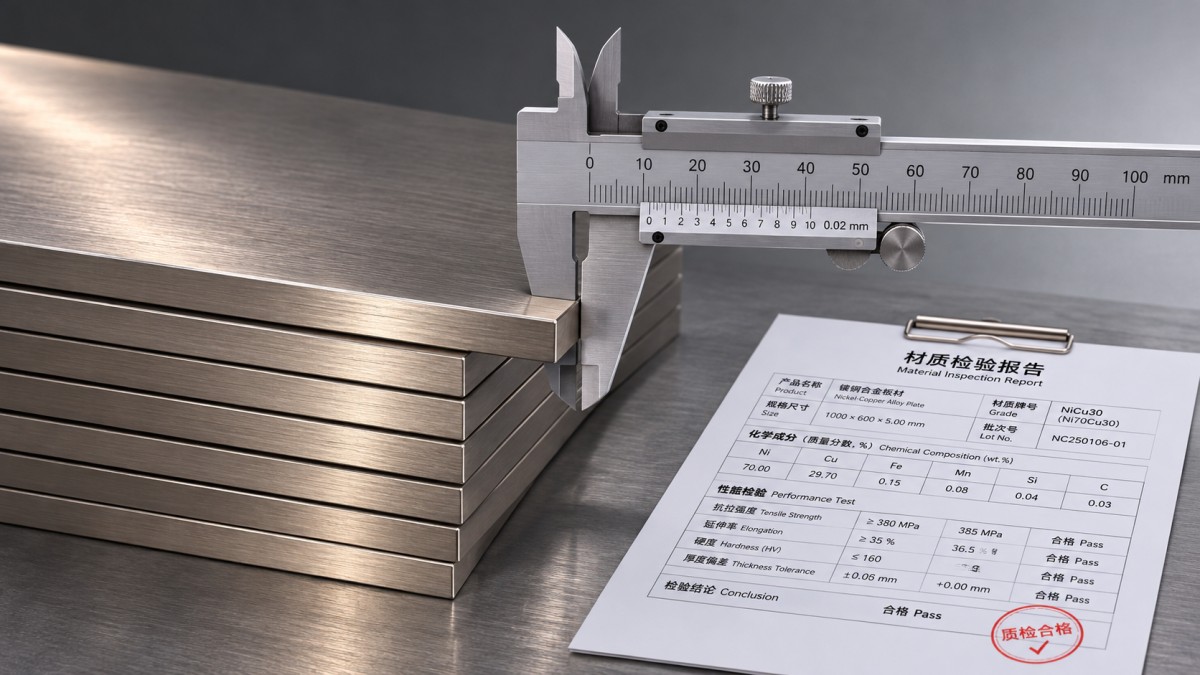
Request a mill test certificate that identifies the manufacturer, specification, grade, heat number and applicable test results. Review the reported chemistry and mechanical properties against the standard and purchase requirements, not simply against the grade printed at the top of the certificate. Confirm which certificate type or inspection documentation the project requires before production or dispatch.
The physical plate should be traceable to the documented heat. Agree how markings will be maintained if the plate is cut into smaller pieces, and whether a material map or transferred identification is required. If positive material identification, ultrasonic examination, third-party inspection or witness testing is needed, put the method, acceptance criteria and timing in the purchase order. These checks are not necessarily included in a base quotation.
A practical warning: positive material identification can support grade verification, but its capability depends on the instrument and method. It does not automatically replace the certified chemical analysis or all tests required by the governing specification.
Compare the landed cost, not just the price per kilogram
Nickel-bearing material generally costs more than ordinary carbon steel, and two offers for nominally the same alloy may cover different work. One may be based on stock dimensions with minimal documentation; another may include cut-to-size pieces, additional testing and export packing. Ask suppliers to separate material, processing, inspection, packing and freight charges so those differences are visible.
Also check whether the price is based on ordered weight, actual shipped weight or the weight of a larger plate before cutting. Confirm quantity tolerances, quotation validity, delivery terms and who carries the risk of damage in transit. A low unit price can lose its advantage if the buyer must pay for excess stock or arrange a second inspection.
Lead time deserves the same scrutiny. “Available” may mean material is in stock, awaiting test documents or still subject to cutting and inspection. Ask for the estimated dispatch date and any dependencies, especially where document approval or third-party attendance can delay release.
Keep related product forms on separate lines
A project may also require alloy bar for valve stems, shafts or fasteners. Shandong Titanium Nickel Special Steel Co., Ltd. supplies a range of special alloys, including nickel-based materials; its Nickel base alloy rod range includes Alloy 400 and other alloy families. Rod and plate are different product forms, however, and should be quoted against their own applicable specifications, dimensions and test requirements. A certificate for one form does not establish compliance for the other.
Before issuing the purchase order, reconcile the drawing, approved material specification and supplier quotation line by line. Record any accepted deviations in writing. That small step gives receiving and quality teams a clear basis for checking the delivered material—and gives procurement a firmer basis for comparing cost.
