


News
- ▶ How to prevent coil damage during delivery from a Monel 400 supplier
- ▶ How to compare freight costs from a monel 400 Coil supplier
- ▶ How coil edge quality affects stamping with Monel 400
- ▶ How to confirm temper requirements with a monel 400 Coil supplier
- ▶ When dual sourcing from an Inconel 625 Supplier reduces risk
Message
How To Choose The Right Nickel Alloy For Your Application
Nickel alloys are often specified when carbon steel, stainless steel, or conventional heat-resistant materials have already reached their limits. That does not make nickel alloy the automatic answer. The right grade is the one that survives the actual combination of temperature, chemistry, pressure, mechanical loading, fabrication route, and inspection requirements for an acceptable lifecycle cost.
For buyers and engineers, the key question is rarely “Which nickel alloy is best?” It is “Which failure mechanism is most likely in this service, and which alloy family addresses it without creating an avoidable cost, fabrication, or delivery problem?” Getting that distinction right early can prevent premature tube leaks, distorted furnace components, stress-corrosion failures, and expensive unplanned shutdowns.
Start with the service envelope, not the alloy name
Trade names such as Inconel, Hastelloy, Monel, and Incoloy are familiar shorthand in the market, but they are not a complete specification. Within any alloy family, chemical composition, product form, heat treatment, dimensional tolerance, and governing standard can materially change performance. A grade that works well as a plate or forged fitting may not be the optimum choice for thin-wall tubing under thermal cycling.
Before requesting quotations, define the service envelope in practical terms:
- Continuous and peak metal temperature, rather than only the process-fluid temperature.
- Medium composition, including chlorides, fluorides, sulfur compounds, acids, alkalis, dissolved oxygen, moisture, and contaminants.
- Operating pressure, pressure fluctuations, flow velocity, erosion exposure, and likely deposits.
- Static load, creep exposure, cyclic stress, vibration, and thermal expansion constraints.
- Required product form, dimensions, joining method, inspection level, and applicable code or customer specification.
A useful material selection sheet distinguishes normal conditions from upset conditions. A reactor may normally run within a moderate temperature range, for example, but cleaning cycles, startup heating, oxygen ingress, or concentration changes can create the corrosion event that determines its service life. In many plants, the most severe condition is not steady-state production.
Separate corrosion resistance from high-temperature strength
Nickel is valued because it can support both corrosion-resistant and high-temperature alloy systems, but these are not interchangeable objectives. An alloy selected primarily for acid resistance may not retain sufficient strength at elevated temperature. Conversely, an alloy designed for oxidation resistance and creep strength may not tolerate a chloride-bearing aqueous stream.
Chromium generally supports oxidation resistance and helps form protective surface films. Molybdenum can improve resistance in reducing acids and localized corrosion environments. Copper is particularly relevant in certain reducing media and seawater-related applications. Cobalt, aluminum, titanium, and other additions can contribute to high-temperature strength or precipitation hardening. The result is that “more alloying” is not a universal advantage: each element is useful in a specific metallurgical and environmental context.
For chemical processing, begin by identifying whether the environment is oxidizing, reducing, mixed, or variable. Sulfuric acid, hydrochloric acid, wet chlorine, caustic solutions, sour process streams, and seawater each create different selection priorities. Chloride concentration alone is not enough; temperature, pH, oxidizing potential, crevice geometry, and stagnant zones can determine whether pitting or crevice corrosion becomes credible.
For furnaces, gas turbines, boilers, and combustion systems, assess oxidation, carburization, nitridation, sulfidation, thermal fatigue, and creep. A component exposed to 850°C gas does not necessarily reach 850°C metal temperature, yet local hot spots, surface deposits, and low-flow areas may push the material beyond its assumed design condition.
Temperature data needs context
Published temperature capability is useful as an initial screen, not as a final selection rule. A material described as suitable for 650°C to 1000°C service may perform very differently across that range depending on load, atmosphere, exposure time, and section thickness. At high temperature, the questions shift from simple tensile strength to creep rupture, stress relaxation, oxidation scale stability, and resistance to repeated heating and cooling.
This is particularly important for tubes. Thin-wall tubes may heat and cool quickly, which can improve temperature response but increase thermal cycling stress. Heavy-wall sections may run cooler internally but develop substantial temperature gradients. A buyer should therefore provide outside diameter, wall thickness, length, straightness requirement, and service orientation along with the alloy request.
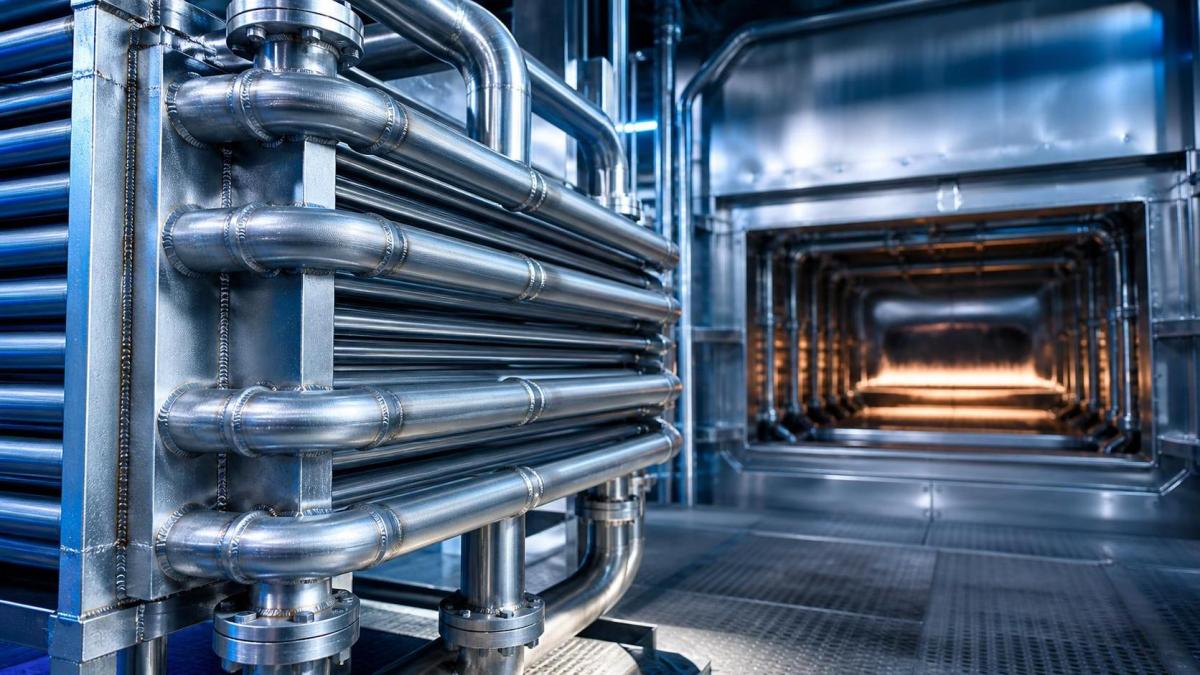
In high-temperature piping and heat-transfer applications, product selection should connect metallurgy with geometry. For example, High-Temperature Alloy Tubes may be considered for combustion chambers, heat exchangers, steam systems, boilers, reactors, and turbine-adjacent equipment where heat, pressure, and aggressive media occur together. Available dimensions and nominal temperature ranges are useful procurement inputs, but suitability still depends on the grade, design code, welding procedure, and actual exposure profile.
Do not overlook fabrication and joining
A technically strong alloy can become a poor project choice when fabrication constraints are ignored. Some nickel alloys require more careful control during cutting, forming, machining, and welding than common stainless steels. Work hardening can affect machining productivity. Heat input, filler metal choice, cleaning practice, shielding gas control, and post-weld treatment may all influence corrosion resistance and mechanical properties.
Welded assemblies deserve special attention because weld metal and heat-affected zones can behave differently from base metal. In corrosive service, incomplete penetration, excessive reinforcement, surface contamination, and crevice-forming geometry may be more important than the nominal alloy grade. In pressure-containing service, welding documentation, welder qualification, non-destructive examination, hydrostatic testing, and traceability are part of the material decision rather than separate administrative tasks.
Ask early whether seamless or welded tube is required. Neither is inherently superior in every case. The decision should follow pressure duty, corrosion mechanism, diameter and wall requirement, code obligations, inspection criteria, production volume, and total installed cost. A vague request for “nickel alloy tube” often produces quotations that are difficult to compare because suppliers may assume different manufacturing routes and testing scopes.
Use standards as a floor, not a complete technical brief
Relevant ASTM, ASME, EN, ISO, NACE, aerospace, power-generation, or customer standards may govern composition, dimensions, mechanical properties, testing, and documentation. However, simply citing a standard does not resolve every risk. Standards may permit a range of chemistry, and a project may need supplementary requirements for corrosion testing, grain size, hardness, surface finish, ultrasonic inspection, eddy-current testing, PMI, or heat-lot traceability.
Material certificates should be checked against the purchase order and the agreed standard, especially for critical components. Review the actual heat analysis, mechanical test results, dimensions, heat treatment condition, test methods, and identification records. Positive material identification can be valuable at receipt and before fabrication, but it does not replace verification of mechanical condition or corrosion-performance requirements.
For regulated or high-consequence projects, involve the design authority and quality team before release. Requirements for pressure equipment, nuclear-adjacent systems, aerospace hardware, or sour service cannot be assumed from a general product description. Project-specific code interpretation should be confirmed against the current governing documents 【pending verification】.
Compare lifecycle cost, not purchase price alone
Nickel and alloying-element markets can make initial prices volatile. That creates pressure to downgrade material or accept a less complete inspection package. Sometimes a lower-cost grade is entirely appropriate. But substituting material without a documented review can transfer cost into maintenance, outage time, lost production, requalification, or safety exposure.
A disciplined comparison considers more than price per kilogram:
- Expected life under normal and abnormal operating conditions.
- Fabrication yield, machining time, weld consumables, and field installation effort.
- Availability of the required size, wall thickness, and certified production route.
- Lead time for mill production, testing, and third-party inspection.
- Consequences of leakage, contamination, unplanned downtime, or component replacement.
This comparison often reveals that the lowest-cost grade and the highest-alloyed grade are both poor choices. The better answer is often a material that is adequately resistant, practical to fabricate, available in the correct form, and supported by credible quality records.
Common assumptions that cause selection errors
One common assumption is that a nickel alloy will resist any corrosive chemical. In reality, even highly alloyed materials have limits, especially in hot concentrated media, mixed acids, fluoride-containing systems, or deposits that create localized concentration cells. Another is that high chromium alone guarantees high-temperature durability. Oxidation resistance is important, but creep strength, thermal cycling, and atmosphere chemistry can be decisive.
It is also risky to select from a previous project without confirming the operating details. A grade that performed well in a low-pressure heat exchanger may fail in a similar-looking system with higher velocity, chloride contamination, or frequent shutdown cycles. Historical plant experience is valuable, but only when the comparison includes actual process conditions and component geometry.
Turn selection into a controlled decision
The most reliable route is to narrow the field through service data, then validate the leading option with the people responsible for process, mechanical design, fabrication, quality, and procurement. For severe or uncertain service, consider laboratory corrosion testing, exposure coupons, finite-element thermal analysis, or a controlled field trial. The cost of validation is usually modest compared with a material failure in a critical production asset.
When requesting supplier support, provide a concise but complete data package: medium composition, temperature profile, pressure, dimensions, product form, expected life, joining method, applicable standards, test requirements, and delivery constraints. A supplier with experience across nickel-based, iron-based, corrosion-resistant, precision, and heat-resistant materials can then offer a technically comparable recommendation rather than a generic grade substitution.
The final choice should be documented as an engineering decision, with assumptions stated clearly. That record matters when process conditions change, when an equivalent grade is proposed, or when the next maintenance team needs to understand why a more specialized alloy was selected in the first place.
