


News
- ▶ Preventing Surface Contamination When Cutting Alloy Sheet
- ▶ Alloy Sheet for Chemical Tanks: Matching Grades to Process Media
- ▶ Choosing Alloy Sheet Thickness for Fabricated Pressure Equipment
- ▶ Alloy Sheet Types Explained: Nickel, Titanium and Stainless Steel
- ▶ Nickel Alloy Strip Orders: Defining Tolerances and Coil Dimensions
Message
Preventing Surface Contamination When Cutting Alloy Sheet
Even minor surface contamination during cutting can compromise an Alloy Sheet’s corrosion resistance, appearance, and downstream performance. For operators working with nickel-based alloys, stainless materials, or titanium, sources of contamination can include shared tools, embedded iron particles, cutting fluids, and improper handling. Understanding these risks is the first step toward protecting the sheet throughout fabrication. This guide explains practical precautions for tool selection, work area preparation, cutting, and post-cut cleaning to help maintain surface quality and support reliable results.
Where contamination enters the cutting process
A clean-looking sheet can pick up contamination from the table long before the cutting tool touches it. Carbon-steel swarf trapped beneath a sheet can become embedded under clamping pressure. A grinding wheel previously used on mild steel can transfer iron to a corrosion-resistant surface. Even a clean glove can spread oil if it has just handled a lubricated component.
The consequences depend on the alloy and its service conditions. Free iron on stainless or nickel-based material may produce rust staining and can initiate localized corrosion in a corrosive environment. Residual oil may interfere with welding or coating. On titanium, surface contamination becomes particularly important before high-temperature operations because contaminants can affect the quality of the finished joint or surface.
It helps to distinguish transferred material from cutting damage. Embedded particles, fluid residue, scratches, heat tint and recast material may appear together, but they do not necessarily require the same remedy. Wiping away a stain, for example, does not establish that embedded iron has been removed.
Prepare the contact surfaces, not just the machine
Before bringing the sheet to the cutting station, remove loose swarf and inspect the table, supports, clamps and lifting equipment. Pay attention to grooves and fixture holes where chips collect. A clean, replaceable nonmetallic barrier or dedicated support can reduce direct contact with contaminated surfaces, provided it is suitable for the cutting method and does not introduce a fire hazard.
Where the same machine processes carbon steel and corrosion-resistant alloys, a changeover procedure matters more than a quick sweep. Clean contact points, remove debris from the work zone and check whether the extraction system could return dust to the sheet. Keep dedicated clamps and tools identified and stored away from ordinary steelworking equipment.
Leave protective film in place where practical, but check the film supplier’s limits and the cutting process. Heat can burn film or leave adhesive residue near the cut. Remove or trim it locally when needed, and avoid trapping chips between the film and the surface.
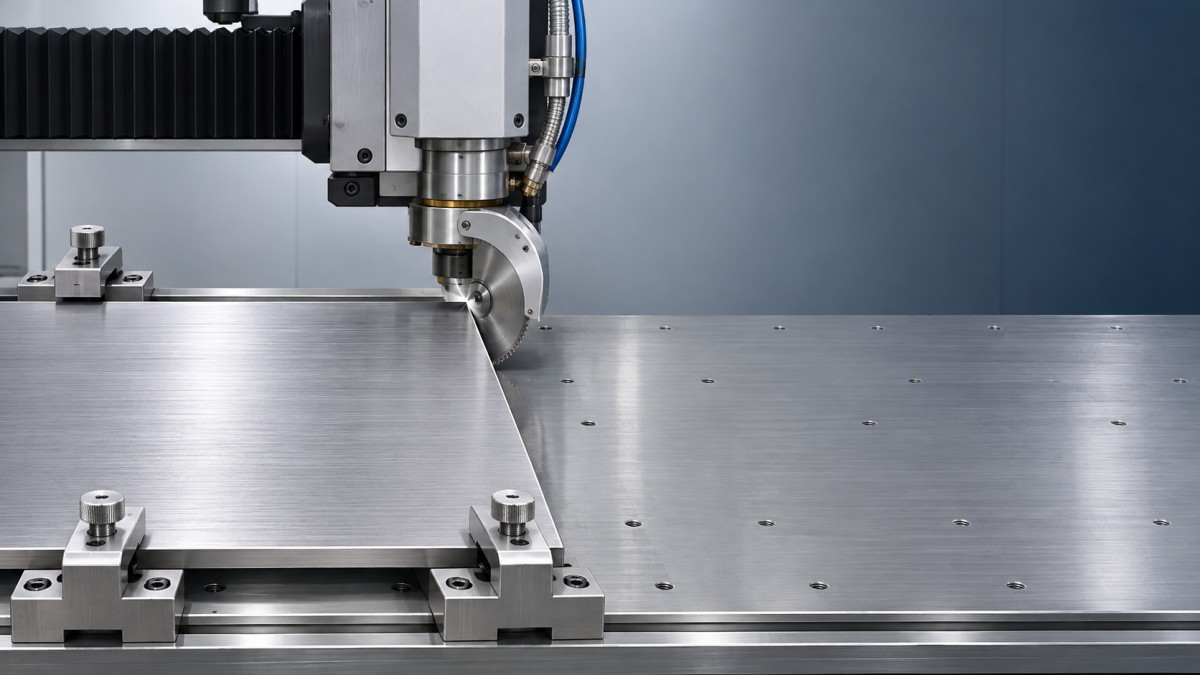
Choose tools and cutting methods with the next operation in mind
Dedicated blades, shears, deburring tools and brushes help prevent cross-contamination. A stainless-steel wire brush should be reserved for the relevant material group and never used on carbon steel first. Abrasives should be selected for the alloy and application; avoid reusing a disc simply because it still has cutting life.
The cutting process changes what needs inspection:
- Shearing: Check blade condition and clearance against the sheet thickness and machine instructions. Dull or contaminated tooling can mark the face and produce burrs that require additional handling.
- Sawing and mechanical cutting: Use a suitable blade and cutting fluid for the grade. Watch for chip buildup and overheating; both can damage the finish or make residue harder to remove.
- Laser or plasma cutting: Review the heat-affected edge, dross and any recast material against downstream requirements. Assist-gas selection, setup and subsequent edge preparation depend on the alloy and the intended operation.
- Abrasive waterjet cutting: Check water and abrasive suitability, as well as the risk of abrasive particles lodging in the edge or surface. A part that will be welded or coated may need extra edge cleaning.
No method is automatically contamination-free. A visually neat laser cut may still need edge preparation before welding, while a mechanically cut edge can be acceptable if its condition meets the job specification. For sensitive work, agree on the required edge condition before cutting a full batch.
Control fluids, handling and airborne debris
Cutting fluids should be compatible with the alloy and removable by the approved cleaning process. Check product information for constituents restricted by the job, especially where high-temperature service, welding or corrosion performance is involved. A fluid that works well on one material may leave an undesirable residue on another.
Maintain the fluid system as well as the fluid itself. Dirty tanks and shared lines can carry chips or residues from earlier jobs. If there is uncertainty, test the cleaning method on a representative offcut and inspect the result before processing production material.
Handle cut pieces with clean gloves and protected lifting devices. Do not slide finished faces across the table or stack sheets with loose chips between them. When parts must be stacked, use clean separators compatible with the finish and storage conditions. Keep identification traceable without using markers or adhesives that the job prohibits.
The same separation principle applies in facilities that also handle metal powders. Materials such as molybdenum, tungsten or nickel-alloy powders used in additive manufacturing and surface treatment require their own handling controls. For example, Refractory Metal Powders for Ultra-High Temperature Service covers materials for processes such as laser cladding and thermal spraying; powder residue should not be allowed to migrate into a sheet-cutting or weld-preparation area.
Clean and inspect before releasing the part
Remove loose chips without dragging them across the surface. Follow with an approved cleaner and clean, non-shedding wipes, changing them as they become soiled. If rinsing is required, use water of the quality specified for the job and dry the part to avoid water marks or deposits. Solvent choice, ventilation and disposal should follow the product’s safety instructions and site procedures.
Inspect both faces, clamp locations and the cut edge under suitable lighting. Look for scratches, staining, burrs, embedded particles and residual film or adhesive. For critical corrosion-resistant parts, visual inspection alone may not be enough to detect free iron. The fabrication specification may call for an appropriate test, such as a free-iron test, with acceptance criteria and subsequent cleaning defined in advance.
Do not assume that passivation will repair every contaminated or damaged surface. Embedded material, heat tint or an unacceptable cut edge may need to be removed using a method approved for the alloy before any specified chemical treatment. Chemical cleaning and passivation also require suitable controls and should follow the applicable procedure.
Set the surface requirement before work begins
The right level of control depends on what happens after cutting. A sheet headed for a visible architectural surface has different concerns from a titanium component awaiting welding or a nickel-alloy part for corrosive service. Before production, confirm the grade, thickness, protective film, permitted marking methods, edge condition, cleaning procedure and inspection requirements.
Shandong Titanium Nickel Special Steel Co., Ltd. works with a range of special alloys, including nickel-based, titanium and corrosion-resistant materials. When specifying sheet for fabrication, sharing the intended cutting method and downstream service conditions alongside the material grade helps identify questions that should be resolved before the first sheet reaches the table.
